
Signs of Depression in Men (and Why They’re Often Hidden)
- Category: General
- July 16, 2026
Key takeaways
- Depression in men is common, and yet it often goes underrecognized.
- There are many reasons why depression may not be obvious for men, including reluctance to directly express sadness or hopelessness, stigma against seeking help, or symptoms being attributed to another cause like stress or overwork.
- Depression can impact a man’s relationships, friendships, performance at work, and daily function.
- Personalized treatment can effectively heal depression in men. Treatment options include psychotherapy, medication, or a combination of both. Lifestyle habits will support good mental health.
Do you feel more irritable and angry lately? Do you say no to hanging out with friends, skip out on the intramural volleyball league you once enjoyed, or generally don’t find fun in much of anything anymore? Has your alcohol intake gone up? Do you stay at work late at night because you’d rather not go home? While that may be a lot of questions at once, they all get to the heart of the matter: Symptoms of depression can be hidden, especially for men. The reassuring news is that depression is treatable and you can find the support you need to improve your mental well-being.
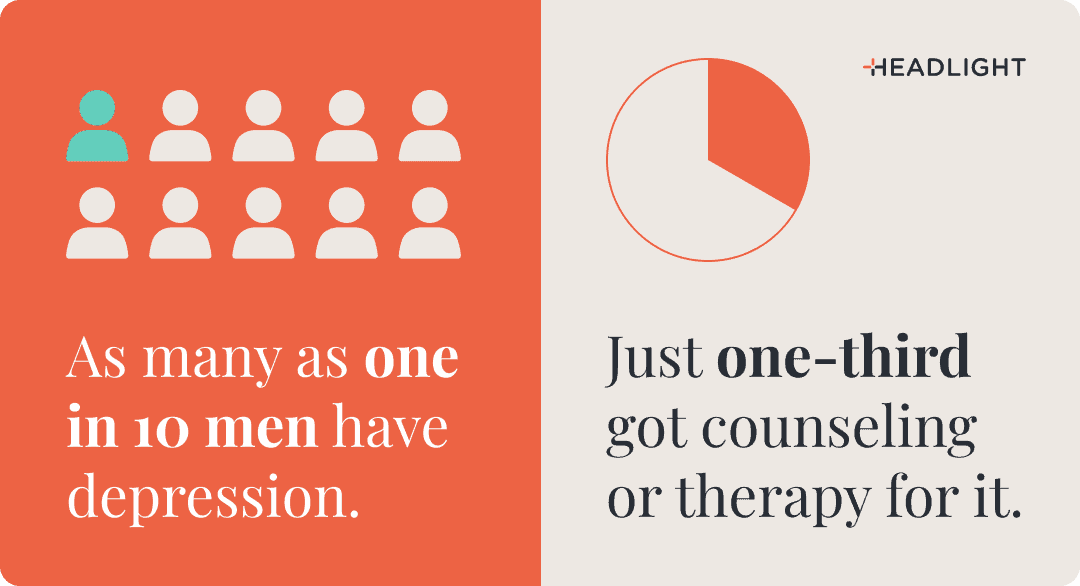
Depression doesn’t look the same in everyone, especially in men. Although hallmark signs are sadness and withdrawal, in men it can also look like overworking, bursts of anger over small things, or pulling away from a romantic relationship. As many as one in 10 men have depression, according to data from the Centers of Disease Control and Prevention, but just one-third of men with depression received counseling or therapy for it.
A significant barrier is that men’s mental health is often overlooked and under-appreciated. “Depression in men is a common but often under-recognized mental health condition,” says Pratik Desai, MD, MPH, a psychopharmacologist with Headlight. Knowing the signs—both obvious and hidden—of depression is a fantastic place to start, whether you are the person with symptoms or a concerned loved one. From there, you can begin to take real steps forward, even when finding help feels awkward, scary, or something you’ve never considered before.“Depression in men is a real and highly treatable condition. Seeking care can meaningfully improve functioning and relationships,” says Desai. Here’s what you need to know.
Signs of Depression in Men: What to Look For
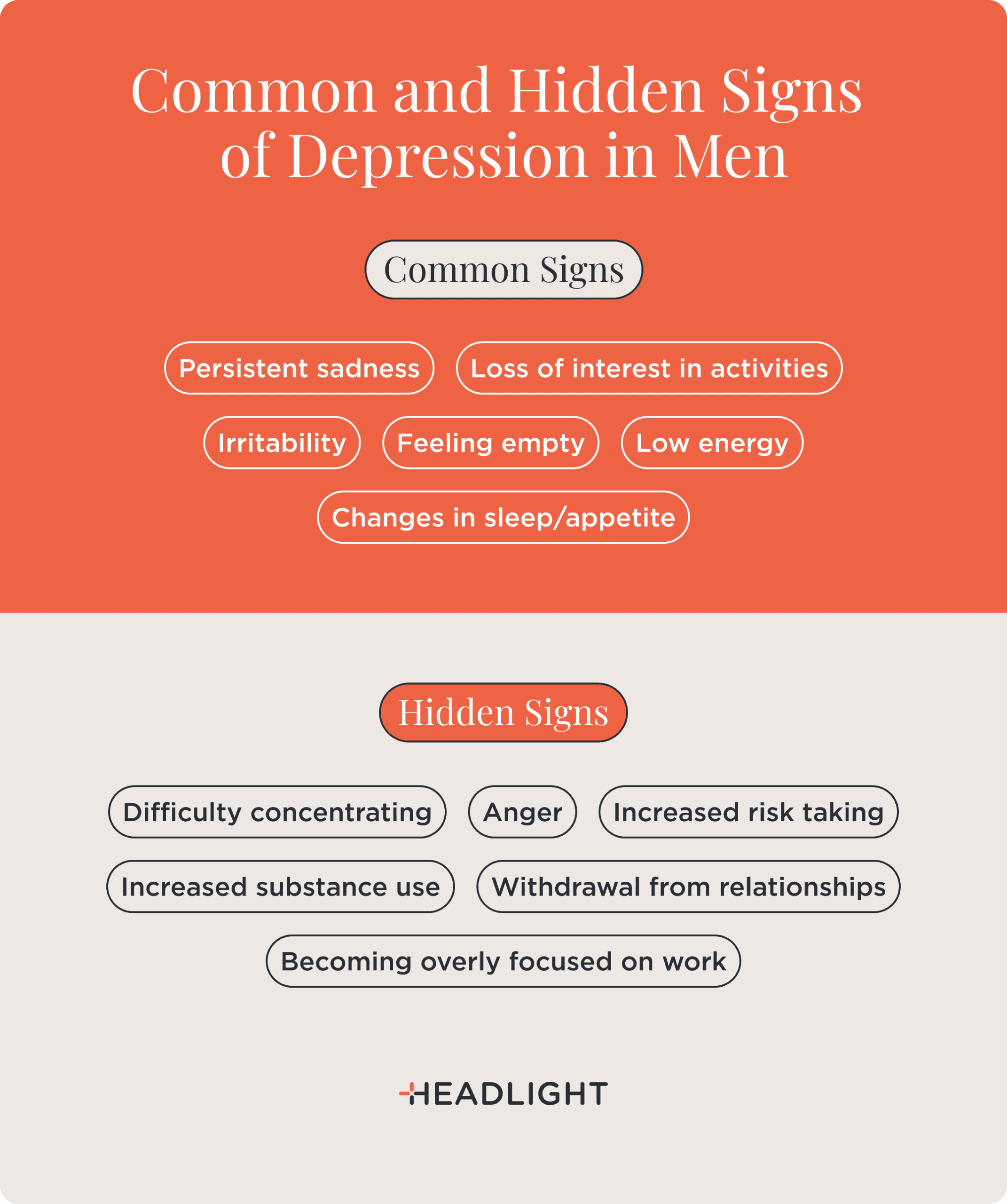
The main symptoms of depression are similar across genders, says Desai. Feeling sad, irritable, or empty are the main components of a depressive episode, according to the World Health Organization (WHO). Loss of interest in activities is another major sign of depression.
In addition, says Desai, be aware of the following signs and symptoms of depression in men:
- Difficulty concentrating
- Low energy
- Changes in sleep and appetite
- Anger
- Increased risk taking
- Increased substance use
- Withdrawal from relationships
- Becoming overly focused on work
“Understanding the different ways depression can present in men is so important for earlier identification and care,” says Desai.
Possible infographic: A checklist of “Common and Hidden Signs of Depression in Men.”
Common: Persistent sadness, irritability, feeling empty, loss of interest in activities, low energy, changes in sleep/appetite
Hidden: Difficulty concentrating, anger, increased risk taking, increased substance use, withdrawal from relationships, becoming overly focused on work
Why Male Depression Is Often Hidden
It can be difficult to recognize what you’re going through when you’re in the thick of it. That’s especially true for men who may have depression. “Men are less likely to express sadness or hopelessness directly,” says Desai. Risk taking behavior, overusing substances like alcohol, pulling away from core relationships, or becoming absorbed in work can be blamed on something else entirely, such as stress or burnout.
Even when you suspect that you might have depression, getting help can be uncomfortable—or it can seem ‘wrong.’ “Cultural and social expectations around masculinity, along with stigma, have historically discouraged many men from seeking help, although attitudes are gradually changing,” says Desai. “Some men may live with symptoms for years without recognizing them as depression,” he says.
Causes of Depression in Men
Depression doesn’t discriminate—it can affect anyone, and it doesn’t mean there’s anything wrong with you. What’s more, a number of different factors contribute to the development of depression, says the WHO and Centers of Disease Control and Prevention (CDC):
- Genetics
- Negative life events, such as unemployment, death of a loved one, and trauma or life changes
- Behaviors, such as substance abuse with alcohol or drugs
- Poor lifestyle habits, such as inactivity or smoking
- Underlying chronic health conditions, such as cancer or diabetes
- Medication side effects
How Depression in Men Can Affect Relationships and Daily Life
Depression in men tends to look different than women in how it appears to others, says psychologist Paul Greene, Ph.D.. “Some men respond to depression by withdrawing socially, throwing themselves into work, becoming more irritable, or increasing their use of alcohol or other substances,” he says. Those responses can affect your relationships or daily function by creating more conflict with your spouse or family, lowering intimacy with a partner, or causing you to miss home or work responsibilities. Substance use and mental health conditions sometimes occur together, further lowering work and school performance and damaging relationships, according to the Substance Abuse and Mental Health Services Administration.
When to Seek Care for Depression in Men
The risks of untreated depression are numerous, including developing more severe and longer-lasting symptoms, not responding as well to treatment, cognitive impairment, and rates of self-harm, according to a review published in the journal Psychiatry Research Communications. Men also have a four times higher risk of suicide compared to women, according to the American Institute for Boys and Men.
The fortunate news is that there’s one question you can ask yourself to know if you should seek care: Are my symptoms affecting my daily life? Desai recommends talking to a healthcare provider if your symptoms interfere with:
- Work or school performance
- Relationships
- Overall functioning
You don’t have to white-knuckle your way through depression. It’s not something that you can wave away. “Men should not wait for symptoms to become severe before seeking support,” Desai says.
If you have thoughts of self-harm or suicide, seek emergency support. Call, text, or chat with the 988 Suicide & Crisis Lifeline for immediate help. If your life is in danger, call 911 or go to the ER now.
How Depression in Men Is Diagnosed
Men may seek mental health help without knowing that they have depression. “Men sometimes initially come to therapy hoping to solve a specific problem like substance use, work burnout, insomnia, or anxiety. As therapy progresses, they often become more comfortable talking about other aspects of their emotional experience, such as depression,” says Greene.
Depression diagnosis is made through a conversation with a licensed mental health professional or healthcare provider. Your clinician will review your symptoms, their severity, and their impact. An official diagnosis of depression means you have a depressed mood or loss of interest/pleasure in most activities that has persisted for most of the day, nearly every day for two weeks, according to the National Institute of Mental Health.
However, if you don’t identify with that entire description, you may still struggle with your mental health, and you shouldn’t have to sit with any level of depression that’s making it difficult to live your life. Make that appointment.
Depending on this conversation, your clinician may also choose to screen you for co-occurring disorders like anxiety, as well as go over your current medications and talk to you about the mood impact of any chronic health conditions, such as diabetes or heart disease.
Treatment Options for Depression in Men
The treatment that’s best for you depends on several factors, such as depression severity, the type of treatment you’re comfortable with, other health conditions you’re managing, and lifestyle habits. Psychotherapy, medication, or a combination of both are the standards of treatment. Lifestyle behaviors, such as exercise, sleep, and stress management can help alleviate mild symptoms. A healthy lifestyle also supports good mental health.
When it comes to therapy options in particular, Greene says that many men respond well to a type of psychotherapy called cognitive behavioral therapy (CBT) due to the structured approach of the treatment. “CBT involves setting concrete measurable goals, and tracking progress as therapy progresses,” he explains. “It also involves learning new skills and making tangible changes to how you do things, which many people, including men, find more comfortable than ‘just talking.’”
Therapy is not one-size-fits-all. And sometimes you don’t know what resonates most until you explore different modalities. Many therapists specialize in more than one therapy approach.
How to Help a Depressed Spouse or Loved One
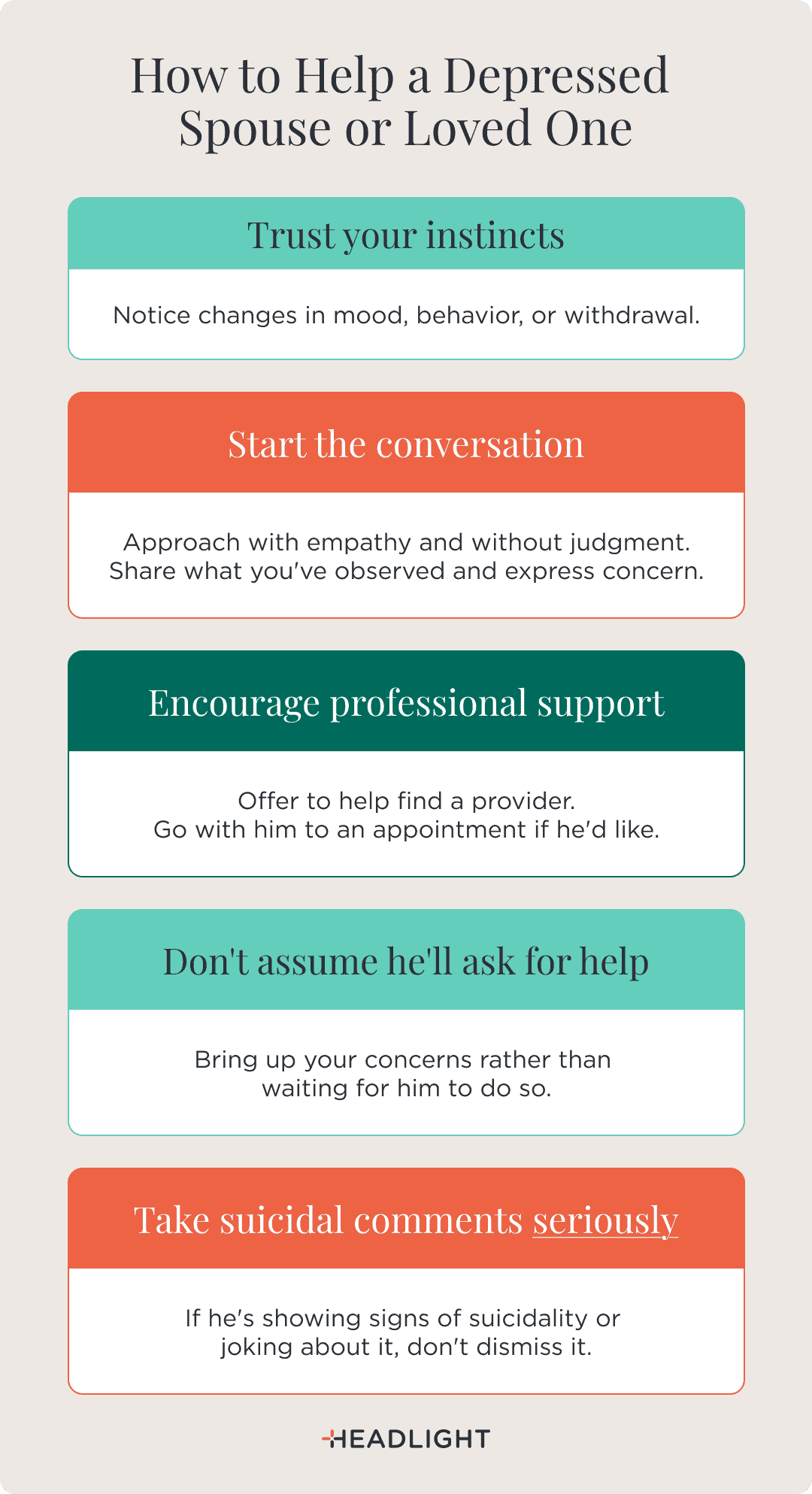
If you’re a friend, family member, or romantic partner of a man that you think may have depression, there are ways you can help. First, trust your instincts: “Loved ones often play a key role in noticing early changes in mood, behavior, or withdrawal in men who may be struggling with depression,” says Desai.
It’s worth speaking up and starting a conversation. Approach it with empathy and without judgment, says Desai. “Gently share what you have observed and express concern rather than trying to minimize or immediately solve the problem,” he says.
While you can’t do the work for him, you can encourage him to seek professional support. If you’d like to help, offer to look for a provider with him or go with him to an appointment, Desai recommends. “Supportive relationships can be an important part of recovery, and depression is treatable with appropriate care and connection.”
Sometimes it’s necessary for you as a loved one to bring your concerns to the table, rather than making assumptions about how he’d act if he really were struggling. “It’s tempting to assume that someone would ask for help if they needed it. That’s often untrue, especially for men, who tend to ask for emotional support less often than women do,” adds Greene.
If a man in your life is showing signs of suicidality, or joking about it, Greene emphasizes the importance of taking it seriously. “Asking whether someone is thinking of suicide does not increase the risk, and can open up possibilities for help that might not otherwise happen.”
What to Expect When Getting Support Through Headlight
When it comes to how to find a therapist and what to expect in therapy, one option men can turn to for support is Headlight, which provides an individualized treatment approach based on your symptoms, goals, and needs, says Desai. There are many types of clinicians who make up the team, including:
- Psychiatrists
- Psychiatric nurse practitioners
- Psychologists
- Counselors
- Therapists
You may not be in a place to know what type of mental health clinician is right for you, and Headlight can help you identify that person and guide you to the ideal treatment options for you. Appointment flexibility matters, too, and at Headlight you can choose from virtual or in-person care. If you’re hesitant to enter into therapy, many people find that virtual appointments are more comfortable and convenient, especially if you don’t want to go in-person sessions, suggests research in BMC Psychiatry.
If you’ve already been treated for depression but current therapies aren’t working for you, you may have treatment resistant depression, something that impacts at least 30% of people with depression, notes research in World Psychiatry. In that case, you still have options. “Headlight offers advanced neuromodulation treatment options, such as Spravato (esketamine) and Transcranial Magnetic Stimulation (TMS),” says Desai.
The main goal of care is to draw up a treatment plan that’s accessible for you—and one that supports you the entire way.
Frequently asked questions
Is male depression a different diagnosis than depression?
No. Depression can occur in people of all genders, and whether you identify as a man, woman, or nonbinary, a depression diagnosis is the same.
Can a man be depressed even if life looks good from the outside?
Absolutely. You can’t judge how someone is feeling by how their life (or demeanor) appears on the outside. There’s a name for this: camouflaging depression, a term for people who have depression but make an effort to appear not depressed, according to research in Discover Mental Health. No matter what your life looks like to others, you can be depressed, and it’s important to seek help.
Can low testosterone or another medical issue look like depression?
There are many physical issues that can affect your mood. One symptom of low testosterone is depressed mood, according to the Urology Care Foundation. Other medical conditions like thyroid dysfunction or certain medications can cause symptoms of depression, notes the National Alliance on Mental Illness.