
What Secure Attachment Style Looks Like in Adult Relationships
- Category: General
- October 16, 2026
Key takeaways
- Secure attachment is the only healthy attachment style.
- People who are secure communicate well, are comfortable with boundaries, have good conflict resolution skills, and believe in honesty rather than implied standards.
- Secure attachment derives from being cared for and having your emotional needs met as a child.
Secure attachment style is a healthy style practiced in relationships where a person balances emotional intimacy with independence and a strong sense of self. People who are securely attached feel confident in themselves to embrace close and trusting relationships.
Despite feeling confident in relationships, securely attached adults still experience conflict, insecurity, disappointment, and stress.
Learning about secure attachment can help you understand relationship patterns.
What is the secure attachment style?
There are four distinct attachment styles: Secure, Anxious, Avoidant, and Disorganized. Christopher Gilbert, MS, LPC, Licensed Mental Health Therapist at Headlight, says secure attachment is the only healthy style, and it sets itself apart by significant traits.
“The traits that indicate a healthy secure attachment style revolve around a person’s beliefs about themselves and the world,” Gilbert says.
Secure attachment typically refers to people who communicate well, are comfortable with boundaries, have good conflict resolution skills, and base all of their interactions from a place of honesty rather than implied standards. “Part of a healthy attachment style is being comfortable with people being there and being comfortable with yourself when you’re alone,” he says.
In secure attachment, relationships provide safety while also leaving room for exploration and autonomy. People who are securely attached means they are able to seek support without feeling entirely dependent on another person. They are also capable of giving and receiving emotional support, and do not need constant closeness or complete self-sufficiency.
What securely attached means in adulthood
Securely attached people are generally able to trust others without requiring constant reassurance. “The reason secure people do better in relationships is because of how they interpret and receive actions in relationships. They tend to assume that people will like them and think things will go well,” says Marisa G. Franco, PhD, professor at The University of Maryland and New York Times bestselling author. “They can sort of see the best in people.”
They also have greater capacity to reflect on their own behavior within relationships. “Research finds that when they get into conflict, they’re more forgiving, they’re better at perspective taking, they’re more likely to initiate interactions, they’re more likely to be vulnerable, but also to graduate vulnerability depending on the other person’s response,” says Franco.
This means as adults, they’re not going into relationships scared. “They’re going into their relationships understanding that it’s a risk, but feeling confident in themselves to navigate the risks of relating to other people,” Franco says.
Securely attached people are also:
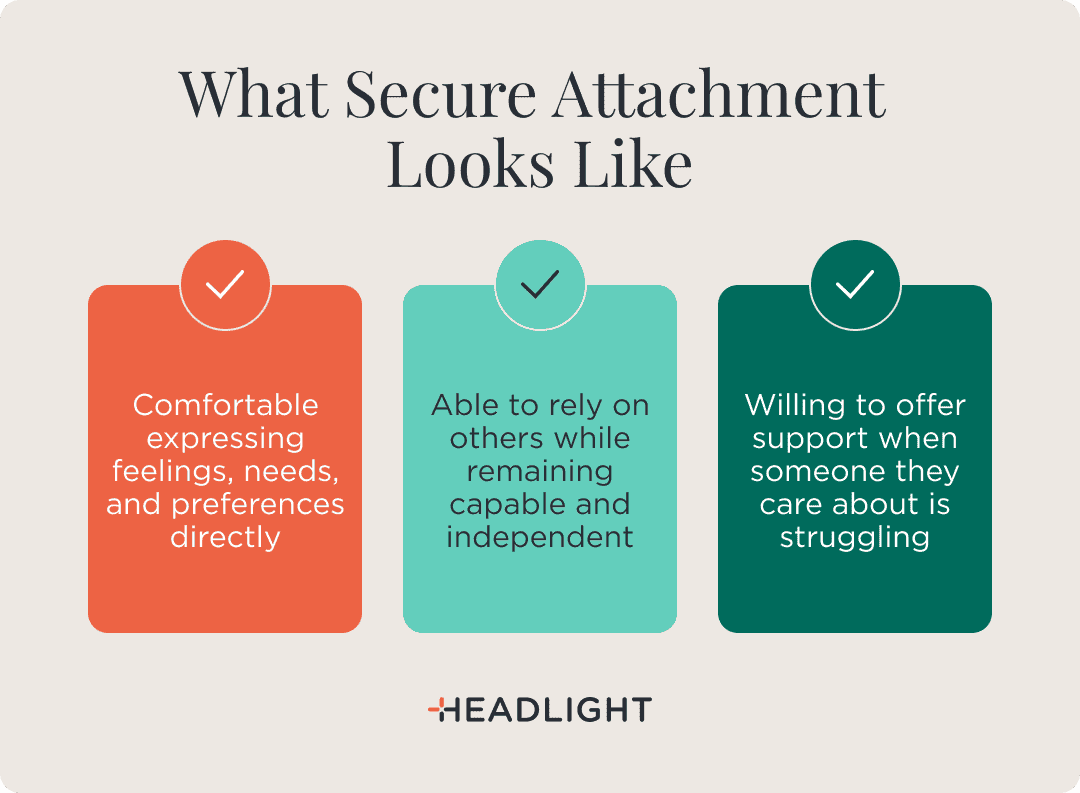
- Comfortable expressing feelings, needs, and preferences directly
- Able to rely on others while remaining capable and independent
- Willing to offer support when someone they care about is struggling
What secure attachment looks like in romantic relationships
People with a secure attachment style are often at peace with themselves. “This means they are comfortable alone and in close proximity to people they care about,” says Gilbert.
When attachment is healthy, the identity of a person is anchored in their beliefs about themselves and the world, he adds. There is no need for fear of rejection or loss of independence, which stems from a lack of a fear motivated response.
In romantic relationships, Gilbert says a securely attached person enjoys closeness without feeling consumed or threatened by it, respects a partner’s need for individuality, friendships, interests, and personal space, is able to ask for comfort or reassurance when genuinely needed, and builds connection through reliability, responsiveness, and mutual trust.
Secure attachment during communication and conflict
During an argument or conflict, securely attached people are more emotionally regulated and less likely to withdraw or lash out at the other person. “Of course, anyone can be pushed to that point, but just generally they’re going in more grounded,” Franco says.
During conflict, they’re good at balancing how to share their own perspectives and needs while also hearing the needs of the other person. “So they’re trying to find wins for everybody,” Franco says.
They may focus on repairing the relationship after misunderstandings or emotional ruptures. For instance, they may say to the other person: This is what I need. What do you need? How do we find a way to meet both of our needs? “Whereas you see anxiously attached people often sacrificing their needs for the other person because they’re afraid of being abandoned and avoidantly attached people often prioritize their needs and don’t have a high regard for the other person’s,” explains Franco.
Securely attached people will generally tolerate temporary disagreement without assuming the relationship is ending.
Emotional safety and regulation in secure attachments
Securely attached people identify and communicate emotions rather than consistently suppressing or escalating them. They seek support during difficult moments while also developing ways to self-regulate. When a partner is distressed, they respond with empathy and appropriate reassurance. If they are distressed, they are able to feel vulnerable without expecting to be punished or dismissed. If they experience relational stress, they can recover rather than remain stuck in recurring threat responses.
Healthy attachment balances closeness and independence
Secure relationships allow partners to feel connected without giving up their individual identities. Time apart does not automatically signal rejection or abandonment. Partners can pursue individual goals while viewing the relationship as a dependable source of connection.
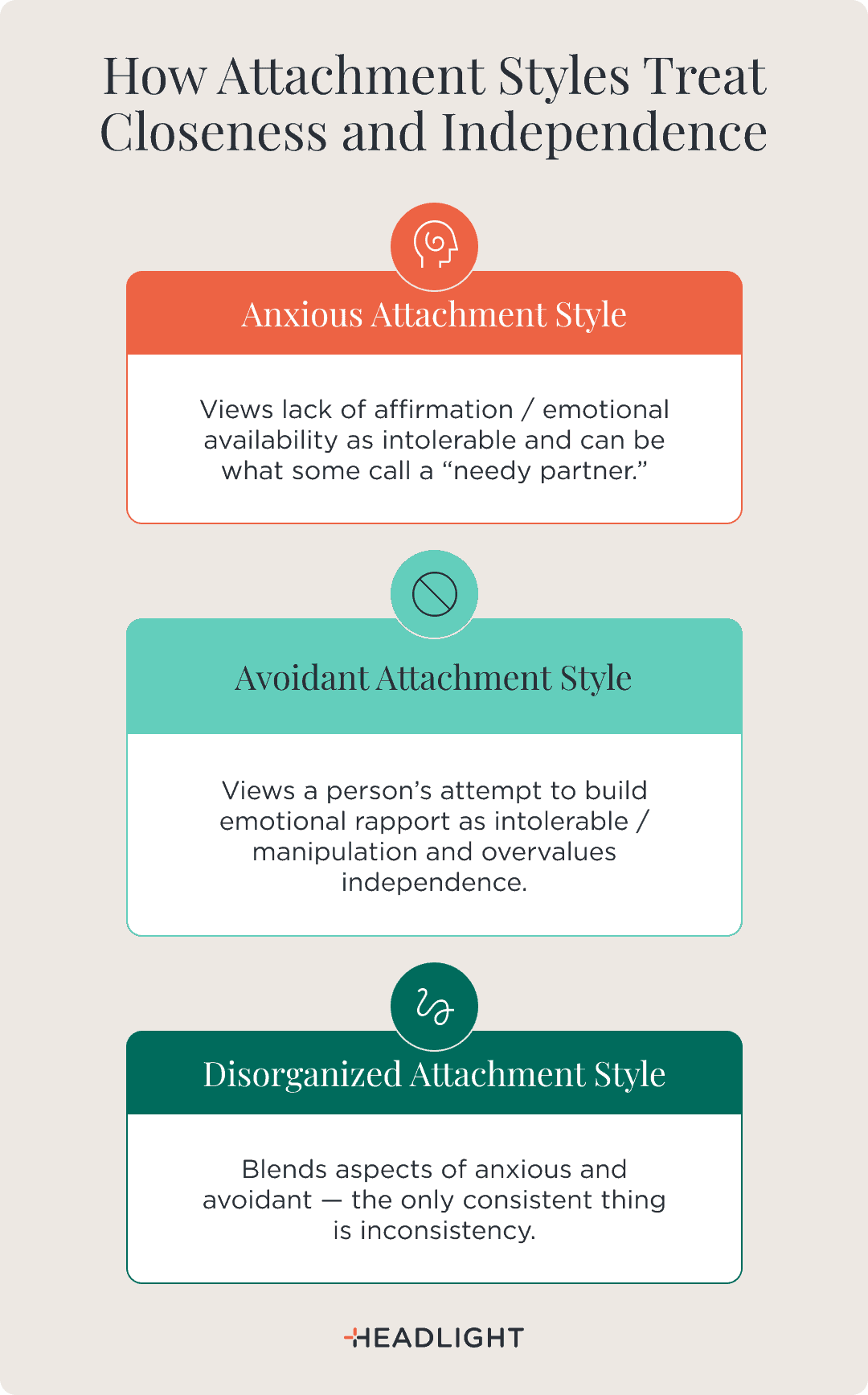
Gilbert explains that the other attachment styles treat closeness and independence in the following ways:
- Anxious attachment style views lack of affirmation, physical proximity, and emotional availability as intolerable and can lead to what some have referred to as a “needy partner.”
- Avoidant attachment style views a person’s attempt to build emotional rapport, establish trust, and secure commitment as intolerable acts designed to trap and manipulate, leading to the overvalue of independence.
- Disorganized attachment style blends aspects of anxious and avoidant, where the only consistent thing is inconsistency.
Where a secure attachment style comes from
Attachment styles are best understood under the umbrella of attachment theory, which is a psychological framework that says people have an innate need to feel close and secure with their caregivers. Attachment theory looks at how attachment develops in early life with caregivers and how these early relationships influence attachment styles later in life.
Franco says people with secure attachments, most likely had parents who prioritized their needs over their own. “Let’s say your kid is crying at a restaurant; you might want that kid to stop crying, but the parent of the kid that’s raised more secure will say, ‘oh, you’re sad, I’m here,’ and will hug and soothe them instead of saying, ‘Stop crying. You’re embarrassing me,’” says Franco.
Because the parents understand their child’s reality and try to meet their needs, the child internalizes that what they need is important. “They learn that their feelings are important,” explains Franco. While it is important to note that parents don’t always respond perfectly in every moment, this type of consistent, dependable caregiving can help children learn that they can lean on others for support.
Franco says secure kids learn from their parents how to treat themselves throughout their life. In her book, “Worth: The New Science of Self-Esteem and Secure Attachment,” she describes this as treating your internal world as if it matters. “So if you feel sad or upset, you’re not minimizing or invalidating your own feelings,” Franco says.
Secure attachment does not mean having a perfect relationship
Securely attached people can still feel jealous, anxious, hurt, frustrated, or angry. In fact, Franco says that most secure people are able to admit when they’re insecure. “Secure people are more emotionally honest, and so they might say, ‘I screwed up.’ But because they’re able to acknowledge and accept themselves, they feel far less shame than the other attachment styles and move through those negative feelings much more quickly,” she says.
For instance, if a secure person feels jealous, they will recognize the feeling, sit with it, process it, and then move on. “It’s not that secure people are invincible. They experience the same negative emotions everyone else does. Security is not defined by the presence of the emotions as much as it is your ability to accept and tolerate those negative emotions,” says Franco.
Similarly, healthy couples can disagree and occasionally communicate poorly, but security is reflected in how they respond. They will look for accountability and ways to resolve the conflict rather than seek out or demand flawless behavior.
Can you become more securely attached as an adult?
Attachment patterns are not necessarily permanent, so it’s possible to become more secure. Also, supportive relationships and new experiences may strengthen attachment security over time. The following are ways to become more secure.
Develop awareness of your current attachment style
Gilbert says try to understand what your attachment style is and what drives it. For instance, those who experience an insecure attachment often have an underlying fear at play. Anxious attachment has a fear of abandonment. Avoidant attachment has a fear of emotional intimacy. Disorganized attachment is often a blend of the two. “I want to be clear that processing through attachment styles is complex work and not something one should expect to have immediate results with,” says Gilbert.
He says attachment forms through passive and active processes and experiences. “While being intentional can reduce time; you will not undo a lifetime’s worth of learning and reinforcement or punishment without an equal amount of sustained effort,” Gilbert says. “Once awareness of your beliefs is established, you can begin questioning and challenging those beliefs that create cognitive dissonance to work specifically through your current attachment style.”
Follow the mantra: Feel, heal, and do
When you have an unpleasant feeling, simply feel it, says Franco. For instance, if you find yourself angry or upset at someone, she says allow yourself to feel angry. For example, if a friend canceled plans last minute because they got sick, you might not want to feel rejected, but you still do. “Allowing yourself to feel those feelings and acknowledge them is really an active care for yourself and in fact makes you better in your relationships,” Franco says.
Then move onto healing by asking yourself why you feel insecure. Franco says tap into memories because they are the database of self-esteem. “You have the memories of someone abandoning you or someone trying to shut you down and memories don’t just record the past; they predict the future,” she says. “People with insecure attachments, think harm is going to happen again and turn to ways they coped in the past, but you can actually revisit memories and change how they sit in your brain.”
This can be done by making meaning of past experiences. When a negative past memory comes up, Franco suggests asking yourself: What meaning do I make out of this experience? How do I benefit from this negative experience? “When we do this, we can change the past, so we no longer look back on those memories and feel scared and anxious or threatened and then those negative emotions aren’t superimposed onto the present in the same way,” Franco says. “So revisiting your past with a different emotional lens can really help you change your attachment style.”
The doing part of Franco’s mantra involves doing something about the feeling, such as telling someone who hurt you that they did, listening to their perspective, and then asking for them to act or communicate differently in the future.
How therapy can support healthier attachment patterns
Therapy can help explore recurring relationship patterns and their possible origins. A clinician can help you to notice triggers around trust, closeness, boundaries, or conflict, as well as teach you how to practice communicating emotions and needs more directly. Therapy can also help you develop strategies for emotional regulation, vulnerability, and relationship repair. If you are interested in couples therapy, it may help you work collaboratively on communication, conflict, trust, and connection. Headlight currently offers a dedicated couples therapy pathway focused on these relationship concerns.
If you recognize recurring relationship patterns that you want to understand or change, or if you want to explore your history, triggers, needs, boundaries, and communication style, connect with Headlight through its Get Support pathway.
Keep in mind that seeking out therapy doesn’t mean you have an attachment disorder or need to be “fixed.”
Frequently asked questions (FAQs)
What are the main signs of secure attachment in adults?
Adults with a secure attachment style share some common traits such as, communication with a focus on honesty and openness, the ability to regulate emotions, the ability to engage in healthy conflict resolution, and security in their identities as individuals and in the roles they take up.
Can an insecure attachment style become secure?
Yes. The first step to developing a secure attachment style is to build awareness about your beliefs and how they influence your behaviors. Attachment forms through passive and active processes and experiences, while being intentional can reduce time; you will not undo a lifetime’s worth of learning and reinforcement or punishment without an equal amount of sustained effort. Once awareness of your beliefs is established, you can begin questioning and challenging those beliefs that create cognitive dissonance to work specifically through your current attachment style.
Can you have different attachment styles with different people?
Yes. To assess what kind of attachment style you have, consider reading about different styles and creating a list of people you practice each style with. If you can identify someone you have a secure attachment style with, start by asking yourself: What makes this relationship unique and what does this person do that makes me feel seen, valued, and heard? Look for those traits in other people or assess if it’s possible to implement boundaries and expectations with people you have an insecure attachment to.