
High-Functioning Depression: Signs You’re Coping But Suffering
- Category: Depression
- August 3, 2026
Key takeaways
- High functioning depression is when someone appears successful in work, school, or social life, but is struggling on the inside.
- People with high functioning depression often experience feelings of hopelessness, despair, loss of interest, and more. However, their perfectionism or compartmentalization skills help them cover up their symptoms so they appear “okay” from the outside.
- High functioning depression isn’t a diagnosis on its own, but rather is a way that multiple mental health conditions can present. These include major depressive disorder, persistent depressive disorder, and anxiety disorders.
- It’s important to seek mental health support if you’re struggling with symptoms of depression, regardless of whether you’re keeping up in your day to day life or not.
People with high functioning depression look “fine” on the outside, but have symptoms of depression on the inside (like feeling numb, disconnected, overwhelmed, or hopeless). With therapy, medication, and lifestyle changes, your symptoms can improve.
Depression isn’t always obvious. You might think that in order to be depressed, a person has to be failing at work or unable to get out of bed or shower. Those are some ways depression can present itself, but they’re not true for everyone. Some people, including myself, experience “high functioning depression.”
When I was depressed, I still showed up at work on time and with a smile. But inside, I felt empty and exhausted. I no longer had the energy to cook elaborate dinners, which I used to love doing, and instead I lived off low-effort granola bars and pre-made Trader Joe’s meals. I lost the motivation to write creatively, which had been my passion. In short, everything felt hard and pointless, but I was still keeping up. In fact, in my work life I was even over-achieving.
I ended up seeing a therapist and that—combined with some changes in my personal life—eventually led to me feeling so much better. But even to this day, I think that people in my life would be surprised if I told them I’d been struggling with depression, because I was still functioning and cheerful from the outside.
I’m far from alone in my experience of high functioning depression. If this experience sounds relatable to you, then know that treatment is available, which is why it’s so important you’re able to recognize the signs first.
What is high functioning depression?
High functioning depression (sometimes also called functional depression) isn’t a clinical term.
“High functioning depression is used to describe people who are able to keep up with life on the outside but are struggling on the inside,” says Andrea Cook, PMHNP, a psychiatric mental health nurse practitioner with Headlight.
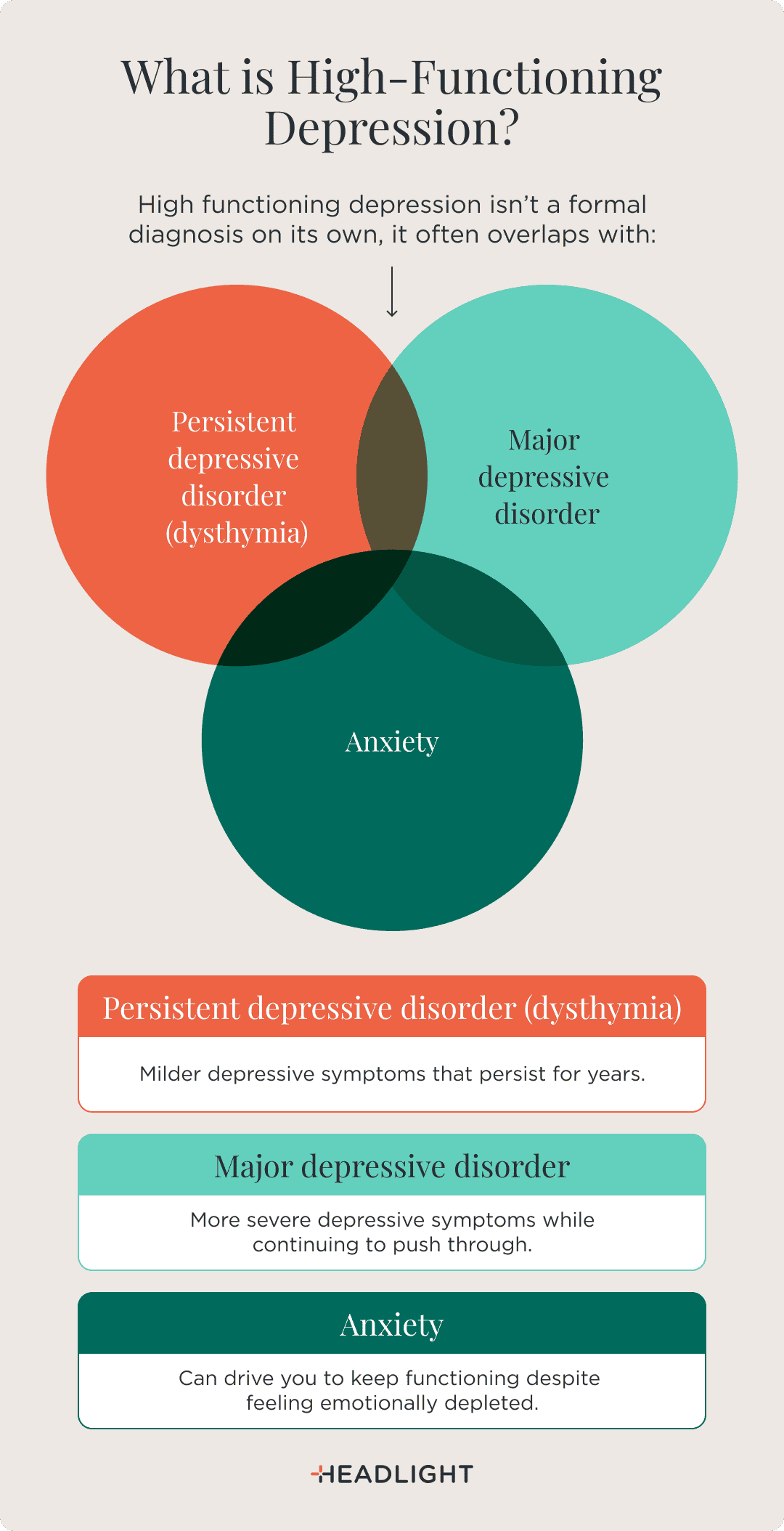
Just because someone is functioning, though, doesn’t mean they’re doing well. While high functioning depression isn’t a formal diagnosis on its own, it often overlaps with:
- Persistent depressive disorder (dysthymia): Less severe depressive symptoms, but symptoms are present for years and you may learn how to function around them.
- Major depressive disorder: More significant depressive symptoms, but you continue pushing yourself to keep everything together.
- Anxiety: An anxiety disorder, or anxious tendencies, is often linked to perfectionism or being a high-achiever. This anxiety can push you through depressive symptoms to continue functioning, even when you’re running on empty.
“One of the biggest misconceptions is that if you’re still going to work or taking care of your responsibilities, you can’t be depressed,” says Cook. “That’s simply not true.”
Depression doesn’t always look how you think it will. It can look like your seemingly cheerful neighbor, your partner who has so many friends, or like you “celebrating” your promotion while feeling desperate inside. “The difference is that no one sees how much energy it takes just to keep that image together,” says Cook.
What does high functioning depression look like day to day?
From an outsider’s perspective, someone with high functioning depression looks pretty “normal” day to day, and perhaps even successful or happy.
They’re still able to manage responsibilities like going to work, turning in schoolwork, taking care of their family, and showing up for friends. Because of this, most people around them have no idea they’re depressed.
Fulfilling these obligations, however, can leave them feeling depleted, leading them to crash once they get home.
“A lot of my clients tell me they feel like they’re just going through the motions,” says Cook. “They get everything done because they have to, not because they enjoy it.”
Signs of high functioning depression
Many of the signs of high functioning depression are internal, rather than external. This means that they’re feelings or experiences most noticeable to the person with depression, rather than observable by others.
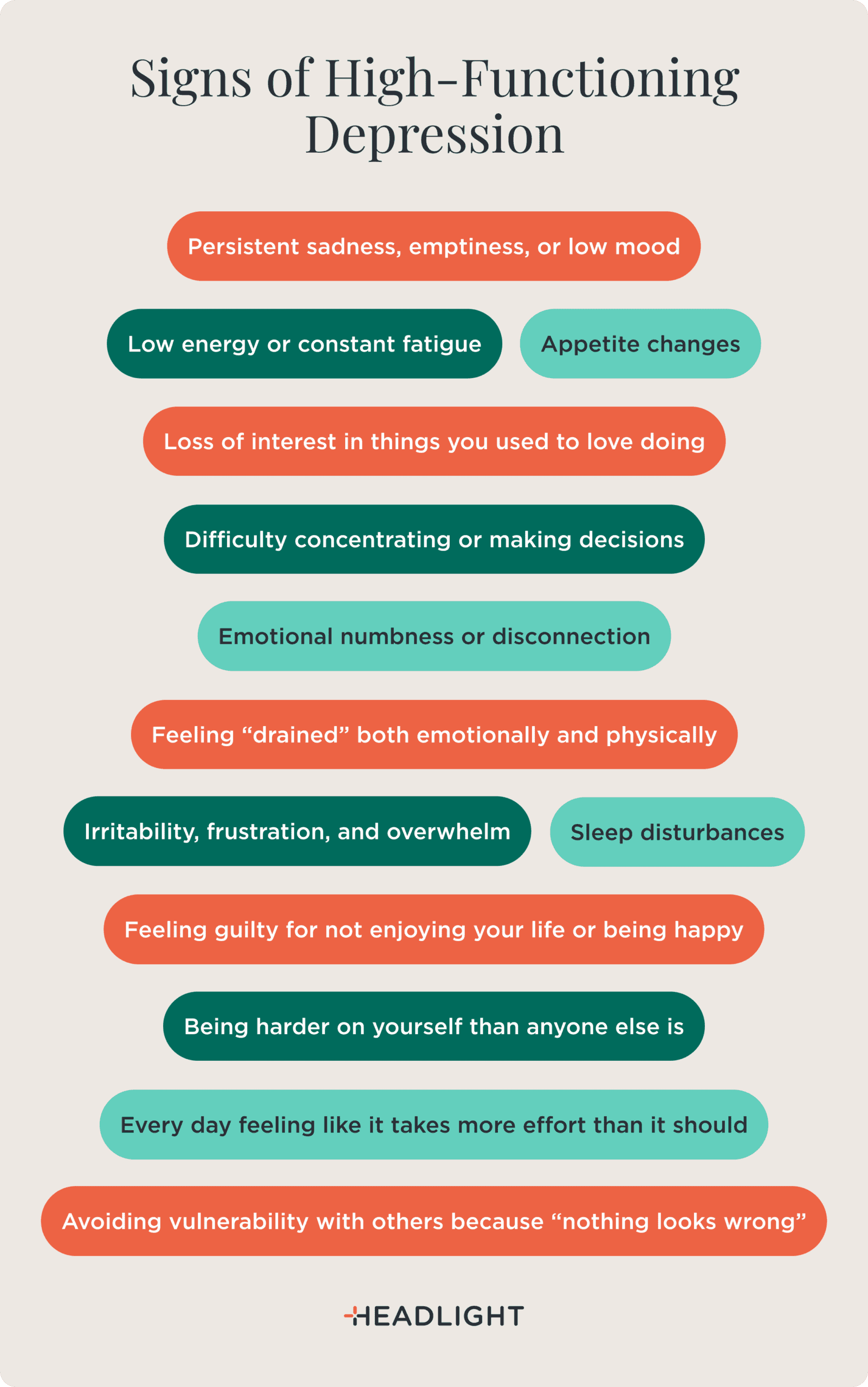
Some signs of high functioning depression include:
- Persistent sadness, emptiness, or low mood
- Low energy or constant fatigue
- Loss of interest in things you used to love doing
- Difficulty concentrating or making decisions
- Emotional numbness or disconnection
- Feeling “drained” both emotionally and physically
- Irritability, frustration, and overwhelm
- Feeling guilty for not enjoying your life or being happy
- Being harder on yourself than anyone else is
- Every day feeling like it takes more effort than it should
- Avoiding vulnerability with others because “nothing looks wrong”
- Appetite changes
- Sleep disturbances
“Sometimes people don’t even realize they’re depressed because feeling this way has become their normal,” says Cook.
Why high functioning depression can go unnoticed
Unfortunately, high functioning depression often goes unnoticed. This contributes to delayed diagnosis and treatment, per BJPsych Bulletin, and progression to more severe symptoms of depression.
People with high functioning depression often minimize their own symptoms because they’re still getting by day to day. They might also feel ashamed, wondering why they feel this way if their life appears “successful” from the outside.
“Depression doesn’t discriminate,” explains Cook. “You can have a great career, supportive family, and still struggle with your mental health.”
Functional depression symptoms can also build slowly over months or years, to the point that it’s hard to notice the change.
“Because they’re still functioning, they often convince themselves that they’re ‘not depressed enough’ to ask for help,” says Cook.
Support systems also may not recognize when someone is struggling with high functioning depression. Loved ones who would normally jump at the chance to be supportive can easily miss the more subtle signs of depression in someone who’s still functioning from the outside.
“Depression, by nature, is excellent at isolating people,” says Katie Rose, LCSW. “When a person is not exhibiting many of the outward signs of a problem, they will be less likely to be asked the questions that would prompt help.”
What can contribute to high functioning depression?
Like many mental health conditions, there’s no singular, obvious cause of high functioning depression. It’s caused by a combination of factors, such as:
- Genetics
- Brain chemistry
- Environmental factors
- Major life transitions or events
- Grief, burnout, or trauma
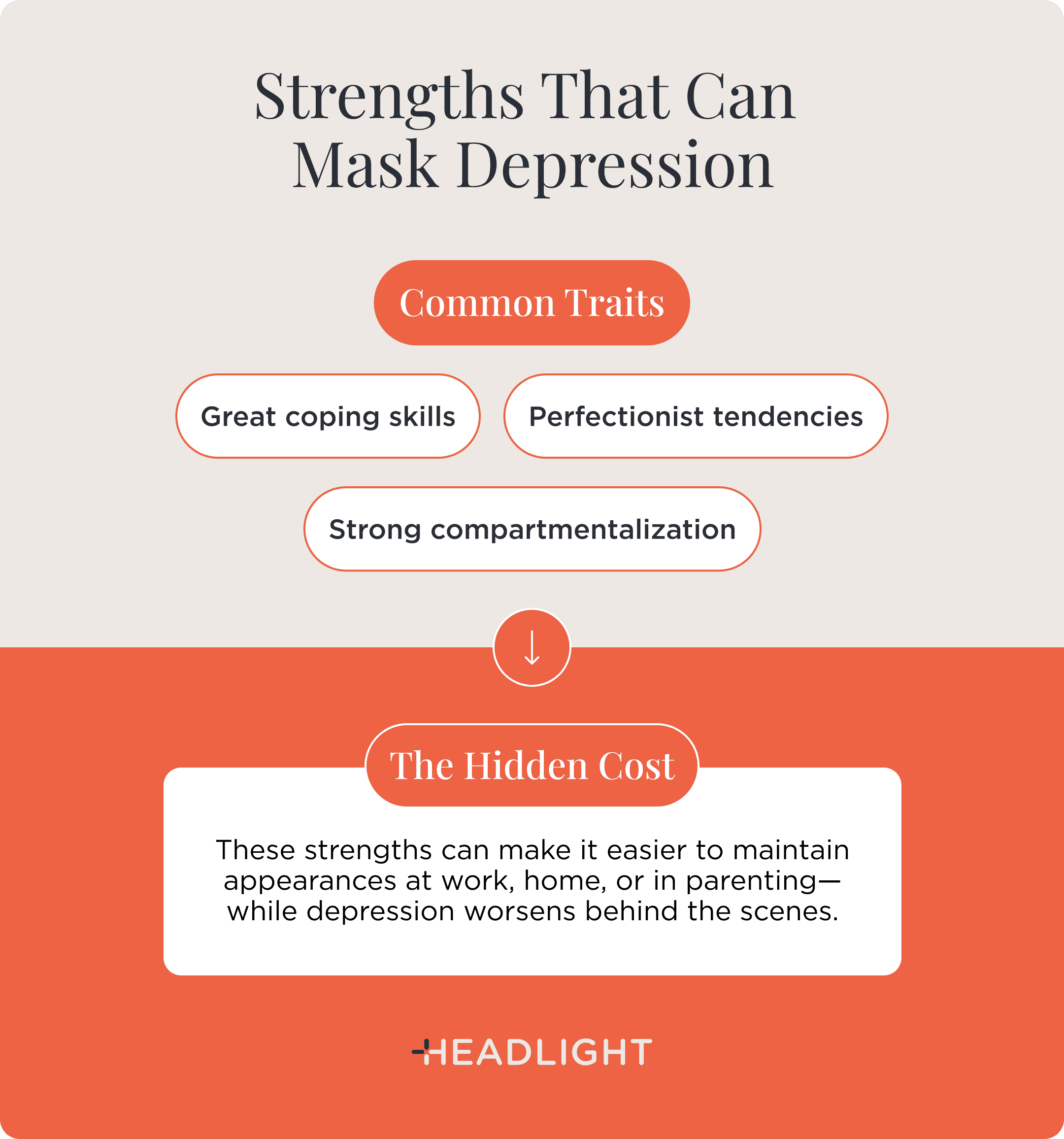
Coping skills and personality traits also play an important role in someone presenting with high functioning depression, as opposed to a typical presentation of depression.
According to Rose, many of her patients with high functioning depression have:
- Great coping skills
- Perfectionist tendencies
- Natural skill at compartmentalizing
These skills and traits can make it easier for the person to compensate for their depression and maintain appearances in certain areas of their life, like work or parenting. Unfortunately, this can come at the cost of worsening their own mental health behind closed doors.
“This will be an effective strategy for a time, but it’s not sustainable long term,” says Rose. “Patients risk becoming more severely depressed than if they had sought help sooner.”
How high functioning depression is diagnosed
If you’re struggling with your mental health, despite still getting by in your work or social life, then it’s important to seek a diagnosis. Getting the correct diagnosis will set you on the path to receiving the treatment that will work best for you.
“You don’t have to wait until you’re falling apart before you ask for help,” says Cook. “If you’re constantly feeling emotionally drained, going through the motions, or wondering why life feels harder than it used to, it’s okay to reach out. You deserve support before you hit your breaking point.”
If this sounds like you, then consider seeing a licensed mental health provider, like those at Headlight. During your first appointment, your clinician may ask you questions about your:
- Mood and emotions
- Sleep
- Appetite
- Energy levels
- Performance at work or school
- Social life
- Concentration and thinking
- Safety
- Substance use
- Medical history and any prescription medications
Beyond this conversation, they may also ask you to complete some mental health screening tools, which are often short surveys or ranking systems.
Ultimately, diagnosis will be based on a combination of factors, like your symptoms, how long you’ve had them, and what areas of your life are impaired. Importantly, your level of functioning should not be the only measure of severity for any mental health condition.
Treatment options for high functioning depression
Here’s some good news: high functioning depression is treatable, through a combination of methods like therapy, medication, and lifestyle changes.
“One of my favorite parts of this job is watching people realize they don’t have to feel this way forever,” says Cook. “Once we find the right treatment plan, so many patients tell me, ‘I didn’t even realize how bad I had been feeling until I started feeling better.’”
Therapy
There are many different types of therapy that can be used to treat depression. Some of these include:
- Cognitive behavioral therapy (CBT)
- Emotionally focused therapy (EFT)
- Psychodynamic therapy
“If one modality fails to produce results, we can try another that fits the patient better,” says Rose.
She also finds that her patients with depression benefit from a therapeutic technique called behavioral activations (BA), which operates under the premise that mood follows action.
“Basically, instead of waiting to feel better to find the motivation to do meaningful activities, we find activities with a low bar of entry that the patient can engage in that will lead to improved mood over time,” she says.
This might look like making yourself take a bubble bath, or Facetiming a friend, or leaving the house for a post-work walk, even when you really don’t feel like it. These might not feel good in the moment but can support your mental health over time.
Medication
Medications, such as antidepressants or anti-anxiety medications, may also be prescribed if you have high functioning depression.
“I always tell patients that medication isn’t meant to change who they are,” says Cook. “The goal is to help reduce the symptoms that are getting in the way of them feeling like themselves again.”
Medication can help turn down the volume on your symptoms, like those feelings of hopelessness or difficulty concentrating.
Once your symptoms are at a more manageable level, you may find it much easier to engage in therapy or implement lifestyle changes.
Lifestyle Changes
Switching up your lifestyle and habits can also help treat depression. Lifestyle changes for depression commonly address:
- Sleep routines
- Movement and exercise
- Nutrition
- Social connection
- Stress reduction
“The most heartbreaking part of watching someone live with high functioning depression is watching them successfully engage in some of the least rewarding parts of life, like work, and have no energy left for the eudaimonic (meaning-based) joys of this world,” says Rose.
Lifestyle strategies, together with therapy and medication, can help you get back to these more meaningful activities, in a way that truly supports your mental health rather than pushing you through the motions.
When to seek care or urgent support
It’s worth seeking help for high functioning depression if your symptoms have lasted more than a couple weeks and are affecting your quality of life. This is true regardless of whether you’re still functioning day to day, or not.
Some signs that you might need to seek mental health support include:
- Feeling hopeless, numb, or disconnected
- Losing interest in things you used to enjoy
- Increasing feelings of guilt or shame
- Life feels manageable, but joyless, meaningless, or exhausting
- Everything feels like it takes more effort than it used to
- Coping by overworking or using alcohol or substances
- Withdrawing from friends or loved ones
- Work, relationships, or self-care starting to slip
Headlight is here to help, whether that’s through diagnosis, medication management, or ongoing therapy support. You can start your personalized matching process to connect with the best clinician for you, and attend sessions either in-person or virtually. Over 90% of Headlight clients have their sessions covered by insurance, and are only responsible for a co-pay.
Some mental health symptoms require more urgent attention. “If you’re ever having thoughts that life isn’t worth living, or thoughts or harming yourself, that’s something to take seriously and seek help for right away,” says Cook.
You can do this by calling or texting 988, which is the national suicide and crisis lifeline. These conversations are always free and confidential.
Frequently asked questions (FAQs)
Can you have depression and still be productive?
Yes, you can have depression and still be productive. People with high functioning depression are skilled at managing responsibilities—like work or caregiving—but can feel like they’re falling apart on the inside.
Is high functioning depression the same as persistent depressive disorder?
High functioning depression is not the same as persistent depressive disorder, but they can overlap. High functioning depression is a common phrase but not a clinical term or official diagnosis. It refers to when someone has symptoms of depression, but is still functioning in work, school, or social life. Persistent depressive disorder, in contrast, is a diagnosable mental health condition that occurs when someone has symptoms of depression for two years or longer. Someone who presents with high functioning depression may actually have a persistent depressive disorder diagnosis. Alternatively, their symptoms could be better explained by other diagnoses, such as major depressive disorder or an anxiety disorder.
Can high functioning depression get worse?
Yes, high functioning depression can get worse if it’s left undiagnosed and untreated. It’s important to seek help from a licensed mental health provider if you’re struggling with your mental health, even if you’re still managing your responsibilities.