
Depersonalization-Derealization Disorder: Signs and Treatment
- Category: General
- September 18, 2026
Key takeaways
- Feeling unreal, dreamlike, or detached from yourself or the world around you can be signs of depersonalization-derealization disorder.
- While a person can experience symptoms of both depersonalization and derealization, they may also experience symptoms of one or the other disorder.
If you are struggling to understand these symptoms and they are interfering with daily life, work, or relationships, Headlight can help connect you with a clinician who can help understand what you’re going through, navigate treatment options, and create a personalized plan. It can be scary when intrusive thoughts like, “What is happening to me?” and “Am I losing touch with reality?” become constant. Feeling detached from yourself or the world may be a sign of depersonalization-derealization disorder. However, in some cases these thoughts and feelings may pass.
Experiencing symptoms of depersonalization-derealization disorder (DPDR) might feel like looking at yourself from outside your body or from a dream-like state. You may also feel detached from yourself or the world. It’s possible to experience one aspect of this condition, but not the other. While both depersonalization and derealization are dissociative experiences, the distinction is whether you feel detached internally or externally.
“Depersonalization is a detachment from self. This can be feeling disconnected from our thoughts, emotions, body, or actions,” says Sheena Jain, LMHC, LPC, therapist at Headlight.
The sense of disconnection from these aspects of self could be experienced in various ways, such as feeling numbness, robotic movements, or a sense that your emotions are not your own.
Derealization differs in that it is a detachment or distortion of surroundings through visual or auditory senses. This can be experienced as foggy, distorted, dreamlike, or sounds being heightened or muted, says Jain.
It’s possible for a person with DPDR to solely experience just depersonalization or derealization or both. Sometimes people can experience them simultaneously or at different times, says Jain.
However, brief experiences of detachment can occur without a disorder. In fact, research shows that 74% of people experience such symptoms at some point in their lifetime. “These symptoms can present during periods of anxiety, heightened stress, exhaustion, or other overwhelming experiences,” she says. “Having these feelings does not automatically mean someone has a mental health disorder.”
Headlight can connect you with a clinician if you experience persistent symptoms that cause significant distress or interfere with everyday life.
What is depersonalization-derealization disorder?
While depersonalization involves detachment from yourself and derealization involves detachment from your surroundings, a distinction of DPDR disorder is that individuals know that although something feels unreal that reality has not actually changed. Jain says they may think or say, “I know this is real, but it doesn’t feel real right now.”
“This is an important part of this diagnosis and distinguishes it from experiences of psychosis where reality testing does not remain intact,” she says.
Having ongoing symptoms of DPDR can affect relationships, work, school, concentration, and daily functioning. “When these symptoms are experienced frequently or over long periods of time, they can become distracting and exhausting,” Jain says.
She says it may be hard to concentrate on school or work and difficult to complete tasks. Some people may experience rumination about their sensations and experiences, which can make it harder to focus. “Individuals may also struggle to remain present in conversations and struggle to feel emotionally connected to loved ones. This can lead to isolation or difficulties experiencing fulfillment or contentment in life,” says Jain.
Additionally, as distressing as DPDR sensations may feel, it can be difficult to describe them to others.
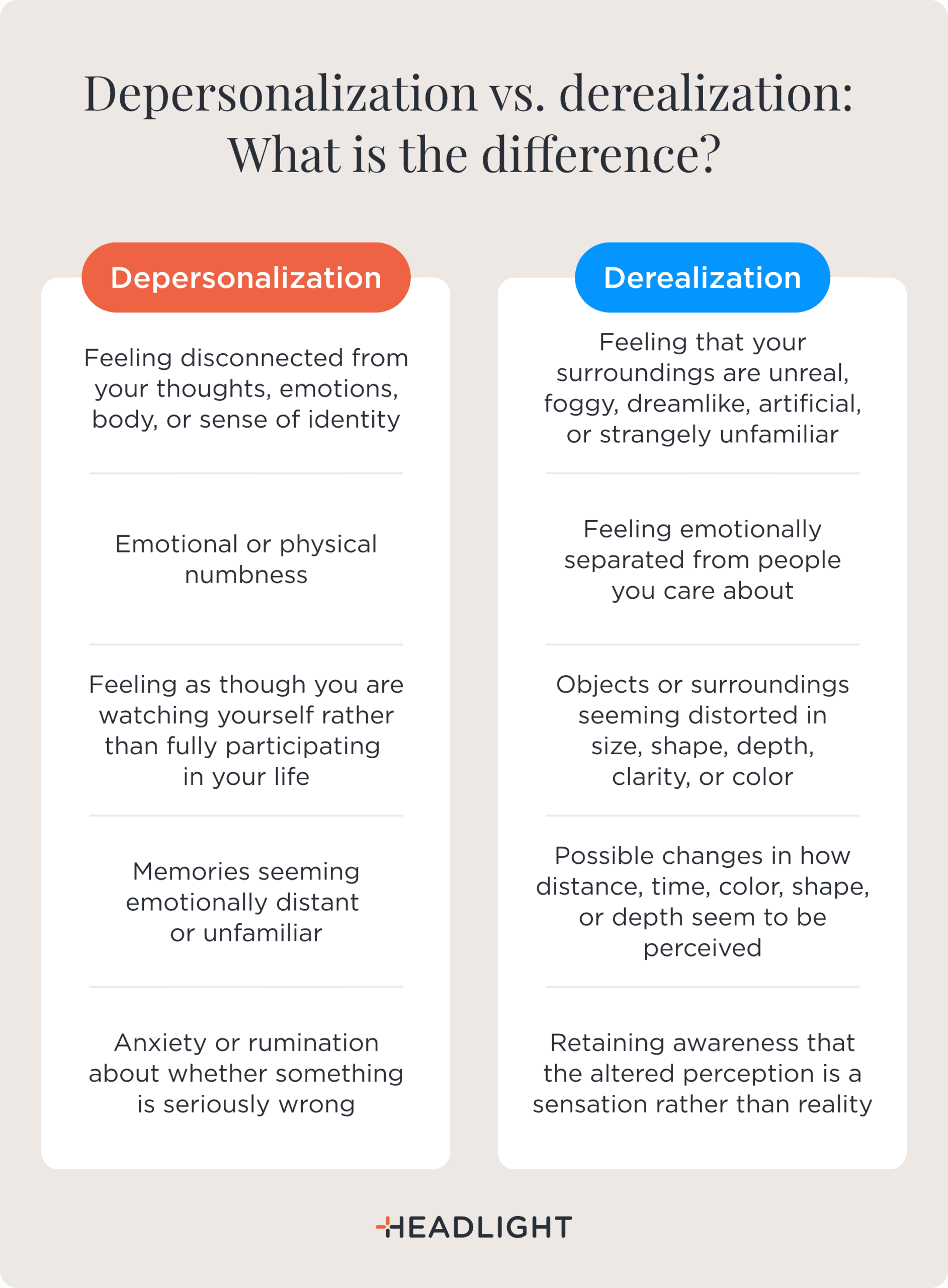
Depersonalization vs. derealization: What is the difference?
Signs and symptoms
A person can experience signs and symptoms of depersonalization or derealization or both. Knowing the signs and symptoms can help determine what depersonalization is.
Signs and symptoms of depersonalization disorder
- Feeling disconnected from your thoughts, emotions, body, or sense of identity
- Emotional or physical numbness
- Feeling as though you are watching yourself rather than fully participating in your life
- Memories seeming emotionally distant or unfamiliar
- Anxiety or rumination about whether something is seriously wrong
The duration of depersonalization symptoms can vary significantly, says Jain, with some people experiencing the symptoms coming and going and others having more persistent symptoms. Brief episodes can last hours to days, and prolonged episodes can occur for weeks, months, or years. “The intensity of these symptoms can also vary throughout,” she says.
Signs and symptoms of derealization
- Feeling that your surroundings are unreal, foggy, dreamlike, artificial, or strangely unfamiliar
- Feeling emotionally separated from people you care about
- Objects or surroundings seeming distorted in size, shape, depth, clarity, or color
- Possible changes in how distance, time, color, shape, or depth seem to be perceived
- Retaining awareness that the altered perception is a sensation rather than reality
What causes derealization and depersonalization?
Researchers don’t fully understand the exact cause of DPDR disorder and there isn’t a single factor that determines if a person will develop it. However, severe stress, post-traumatic stress disorder (PTSD), fear, or traumatic experiences may trigger or contribute to symptoms.
“Current research suggests that it develops through a combination of psychological, biological, and environmental factors,” says Jain. “There has also been a noted association between childhood interpersonal traumas for many individuals, in particular emotional abuse or neglect.”
Additionally, she says certain substances like alcohol and medical conditions or other physiological factors can also cause similar symptoms, which is why professional evaluation is important.
“Some of these factors may increase vulnerability for some individuals, but they are not evidence that someone will develop the disorder,” says Jain.
How is depersonalization-derealization disorder diagnosed?
A qualified mental health professional such as a therapist, psychologist, or psychiatrist can diagnose DPDR based on a detailed discussion of symptoms, frequency, duration, triggers, and impact on daily functioning. Evaluation may include reviewing mental health history, medications, substance use, and co-occurring conditions. Physical exams or laboratory testing may sometimes be used to rule out medical, medication-related, or substance-related causes.
Clinicians also assess whether depersonalization, derealization, or both are persistent or recurrent and cause meaningful distress or impairment. Quintin Bailey, PsyD, ABPP, Licensed Clinical Psychologist, says the level of distress, impairment, or impact on functioning helps determine if the presence of these symptoms meets the diagnostic threshold for DPDR.
Although depersonalization and derealization have separate symptoms, they can be part of a larger spectrum or cluster of dissociative experiences. “Their presence alone does not necessarily indicate that DPDR is the correct or most accurate diagnosis; this depends on the larger clinical presentation,” says Bailey.
If you’re feeling recurring, distressing, or disruptive feelings of depersonalization or derealization, Headlight can connect you with a clinician who can better clarify your symptoms and develop an individualized treatment plan based on your needs and preferences.
Is there a depersonalization disorder test?
There isn’t a single online or laboratory test that can diagnose DPDR and diagnosis requires clinical evaluation rather than a self-test score alone. However, a clinician may use questionnaires or structured assessments, including clinical interviews, to better understand symptoms and their severity.
“This helps with ruling out other possible diagnostic explanations for the symptoms. It also gives us a reference point in the treatment to understand the severity of the experience, but also to assess if treatment is helpful and having the intended positive impact in terms of reducing dissociative experiences and related distress,” says Dr. Bailey.
On the Dissociative Experiences Scale – II (DES-II), Dr. Bailey says a score of 5.4 or below is expected for the general population, which means that some level of dissociation is normative and an expected part of being alive. “Like most psychological defense mechanisms, it starts to cause distress when it is the only way we know how to cope with distress or psychological suffering,” they say.
Evaluation by a qualified clinician is important for diagnosing DPDR and the correct treatment approach. “When I am assessing a patient, I always ask about the last time they had a physical or routine medical care and consider that when offering even a provisional diagnosis depending on other clinical history or factors unique to each person,” says Dr. Bailey.
To help your clinician make a diagnosis, keeping track of when your symptoms occur, how long they last, what might be possible triggers, and how they affect your everyday life.
Treatment for depersonalization-derealization disorder
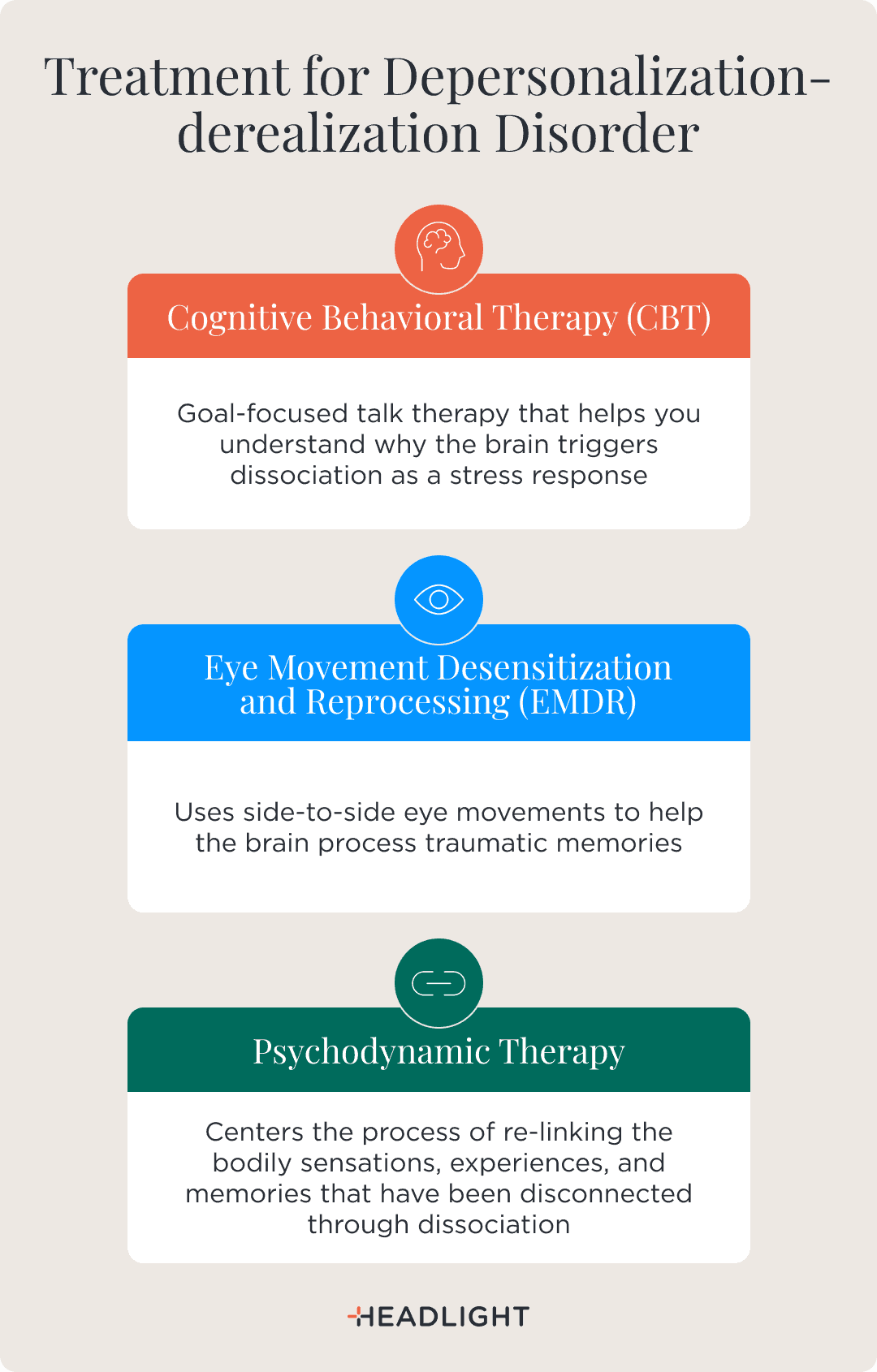
Currently there are not any medications specifically approved for dissociative symptoms. Therapy is the primary treatment approach and may help a person understand their triggers, reduce distress related to symptoms, develop coping strategies, and reconnect with emotions and surroundings. Therapy can also help address trauma, anxiety, depression, or other co-occurring concerns when relevant. The following are approaches often used.
- Cognitive behavioral therapy (CBT), is goal-focused talk therapy that helps you understand why the brain triggers dissociation as a stress response and how to cope with catastrophic thoughts such as “I’m losing my mind.”
- Eye Movement Desensitization and Reprocessing (EMDR), uses side-to-side eye movements or other forms of bilateral stimulation to help the brain process and store traumatic memories.
- Psychodynamic therapy centers the process of re-linking the bodily sensations, experiences, and memories that have been disconnected through dissociation. “This approach to treatment integrates both increased awareness and insight into the self, but also the reparative experiences within a relational dyad,” Dr. Bailey says.
“All can be effective if there is a strong sense of trust between the provider and the person seeking services,” says Dr. Bailey. “[Find] a clinician whom you feel safe enough to share even the difficult and intense things with; healing is hard enough.”
Headlight can help find the right fit for you based on your individual needs and preferences.
Can medication help with depersonalization or derealization?
There isn’t a medication specifically approved to treat or resolve DPDR, but medication may sometimes be considered when anxiety, depression, or other co-occurring symptoms are present. Decisions about medication should be made by a clinician and individualized based on symptoms, other conditions, risks, and treatment goals. It’s important to consult a psychiatrist or your primary medical doctor about benefits, side effects, and alternatives of medication.
Coping with depersonalization and derealization symptoms
Grounding strategies that redirect attention toward the present environment and physical sensations can help get you back in touch with your body and the present moment. Strategies can include guided meditation, body scans, and different breathing patterns. “I always encourage trying a few and finding the type of paced or rhythmic breathing that helps your nervous system feel calmer,” Dr. Bailey says. “One cadence might work for my body and create anxiety in yours; there is no one correct pattern.”
Dr. Bailey suggests finding a routine time in the morning or evening to practice the exercises daily for at least five to 10 minutes. “If we practice grounding, our nervous system learns on a more unconscious or automatic level that this feels good and calming,” they say. “It doesn’t make it seamless, but it can make it significantly easier to use these types of strategies when feeling actively distressed.”
Excessive checking or rumination about whether things are real can create a prolonged experience with depersonalization and/or derealization. “Some grounding strategies include saying aloud things like the current date, time, location, and other details [can] help orient the self to the here and now,” says Dr. Bailey.
Engaging in embodied activities such as gentle movement or artistic practice can give an energetic outlet while also redirecting the mind away from excessive checking or rumination, they note.
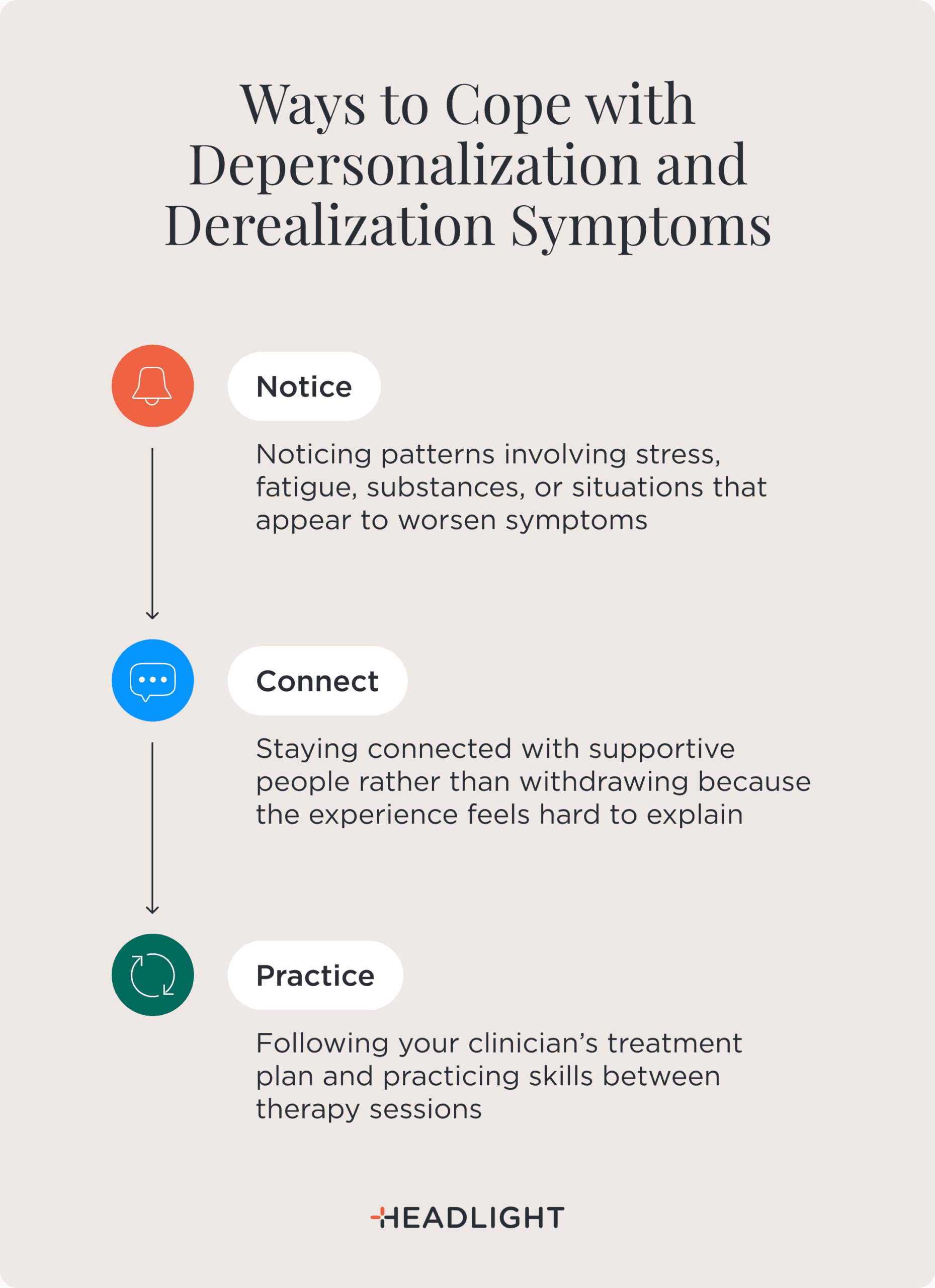
Other ways to help cope include:
- Noticing patterns involving stress, fatigue, substances, or situations that appear to worsen symptoms
- Staying connected with supportive people rather than withdrawing because the experience feels hard to explain
- Following your clinician’s treatment plan and practicing skills between therapy sessions
When to seek professional or urgent support
If symptoms persist, worsen, repeatedly return, feel distressing, or interfere with work, relationships, school, or daily activities, it’s time to reach out to a clinician. It’s also time to get help when symptoms are new, severe, or potentially related to medication, substance use, or another medical condition.
If you or a loved one are at immediate risk of harming themselves or another person or are in immediate danger, call or text 988 for crisis support or call 911.
“None of us will live a life without suffering, and all of us deserve and can create a life where we experience joy and the fullness of what it means to be alive and in relationship with others,” Dr. Bailey says. “Asking for help can feel daunting and you are worth it.”
Frequently asked questions (FAQs)
Can anxiety cause depersonalization or derealization?
High levels of distress, including anxiety, can trigger episodes of or intensify existing experiences of depersonalization and/or derealization. Dissociation is a psychological defense against feeling completely overwhelmed or annihilated by distress.
Is depersonalization-derealization disorder psychosis?
No. The diagnostic criteria in the DSM-5-TR specifically includes, “reality testing remains intact,” which would be a primary consideration for ruling out psychosis. However, someone experiencing psychosis or who has been diagnosed with a psychotic spectrum disorder can experience the symptoms of depersonalization and/or derealization.
Can depersonalization-derealization disorder go away?
Many people experience significant improvement in symptoms and some recover completely. Some individuals may have symptoms that come and go while others experience them for a longer period of time.
Deep dive recommendations