
Do I Need a Therapist? 10 Signs It’s Time
- Category: General
- August 14, 2026
Key takeaways
- Therapy can help with persistent distress, relationship strain, sleep or appetite changes, avoidance, burnout, grief, and feeling stuck.
- Sometimes therapy and medication management are needed.
- If your symptoms are interfering with daily life or relationships, or if you want help sorting through what you’re experiencing, Headlight can help connect you with a clinician who can help clarify goals, explore therapy or psychiatry options when appropriate, and create a personalized treatment plan.
When support from friends, family, or peers doesn’t seem like enough, it may be time to seek out professional help. Asking yourself if it’s time is the first step in caring for your mental health.
Maybe you lie awake replaying conversations in your mind or everyday tasks feel overwhelming, or perhaps you find yourself snapping at people you care about. If you’re wondering if things are “bad enough” to get help and you keep asking yourself: “Do I need a therapist?”, this article will help you navigate how to know if you need therapy.
“The choice to start therapy often comes out of difficult and painful life experiences and emotions. Considering the need for support through these circumstances is another difficult experience within itself,” says Bryn Chesser, LMFT, therapist at Headlight.
Considering therapy is a meaningful first step.
“[This] consideration is a strength that demonstrates a refusal to give up, a dedication to care for yourself, and an opportunity to create meaningful change,” says Chesser.
Psychotherapy is all about helping you better understand yourself, your patterns and blind spots, navigate life stressors, and improve your relationships with others, says Deborah Serani, PsyD, ABPP, psychologist and professor at Adelphi University in New York.
“While being in a crisis is a good reason to reach out to a mental health professional, you can also benefit from entering therapy without an emergency,” says Dr. Serani. Therapy can help with symptoms, life stress, relationships, grief, trauma, self-understanding, and more.
“The goal of therapy is to help you learn how to use mindful tools and techniques to move through ordinary life issues, and even bigger challenges,” Dr. Serani says.
However, if you experience thoughts of self-harm, harming others, or immediate danger, seek urgent support right away.
Do I need a therapist?
If you’re asking yourself: “Should I go to therapy?”, keep in mind that you may benefit from therapy if emotions, stress, relationships, sleep, work, or daily routines feel harder to manage. Therapy may also help if you feel stuck, disconnected, overwhelmed, or unsure how to change a pattern.
Even if you don’t have a diagnosis, you can still reach out to a therapist. They can help you understand what’s happening and build practical tools. “Therapy should never be about depending on your mental health clinician to tell you what to do. It’s about helping you learn so you can be independent and authentic in your life,” says Dr. Serani.
If distress is persistent, escalating, affecting daily life, or hard to manage alone, therapy is worth considering. Schedule an appointment and treat it as an exploratory conversation. Look at your first appointment as a meet-and-greet for both you and your therapist.
“Therapists want to make sure the treatments we use are a good fit for what you’re looking for in your life. It’s also a way to see if you’re comfortable with the therapist. It’s a chance to talk about goals, ask questions, and other issues,” says Dr. Serani. “Think of it as a test drive for what the teamwork might feel like if you decide to move forward.”
10 signs you need a therapist
The list below can help identify common signs of mental health concerns and answer the question: “Do I need therapy?”. However, it’s not a one-size-fits-all checklist. “Everyone’s experience is unique. Even if your experiences don’t match every symptom on the list, seeking help early can prevent symptoms from worsening, provide clarity about what you’re experiencing, and equip you with practical strategies to restore balance and improve your well-being,” says Dr. Serani.
The key to understanding mental health begins with recognizing that life is filled with both good and bad moments, she adds. “Everyone experiences stress, sadness, worry, frustration, and emotional ups and downs as part of being human. These feelings naturally ebb and flow from day to day and often improve as circumstances change.”
What distinguishes good mental health from real mental health concerns is not simply what you are thinking or feeling, but how long it lasts, how intense it becomes, and how much it interferes with your daily life. If you find yourself experiencing any of the challenges listed consistently for two weeks or longer, it may be time to seek support. “Mental health professionals look at the duration, intensity, and impact of symptoms, not just their presence, when determining whether someone may be experiencing a mental health condition,” Dr. Serani says.
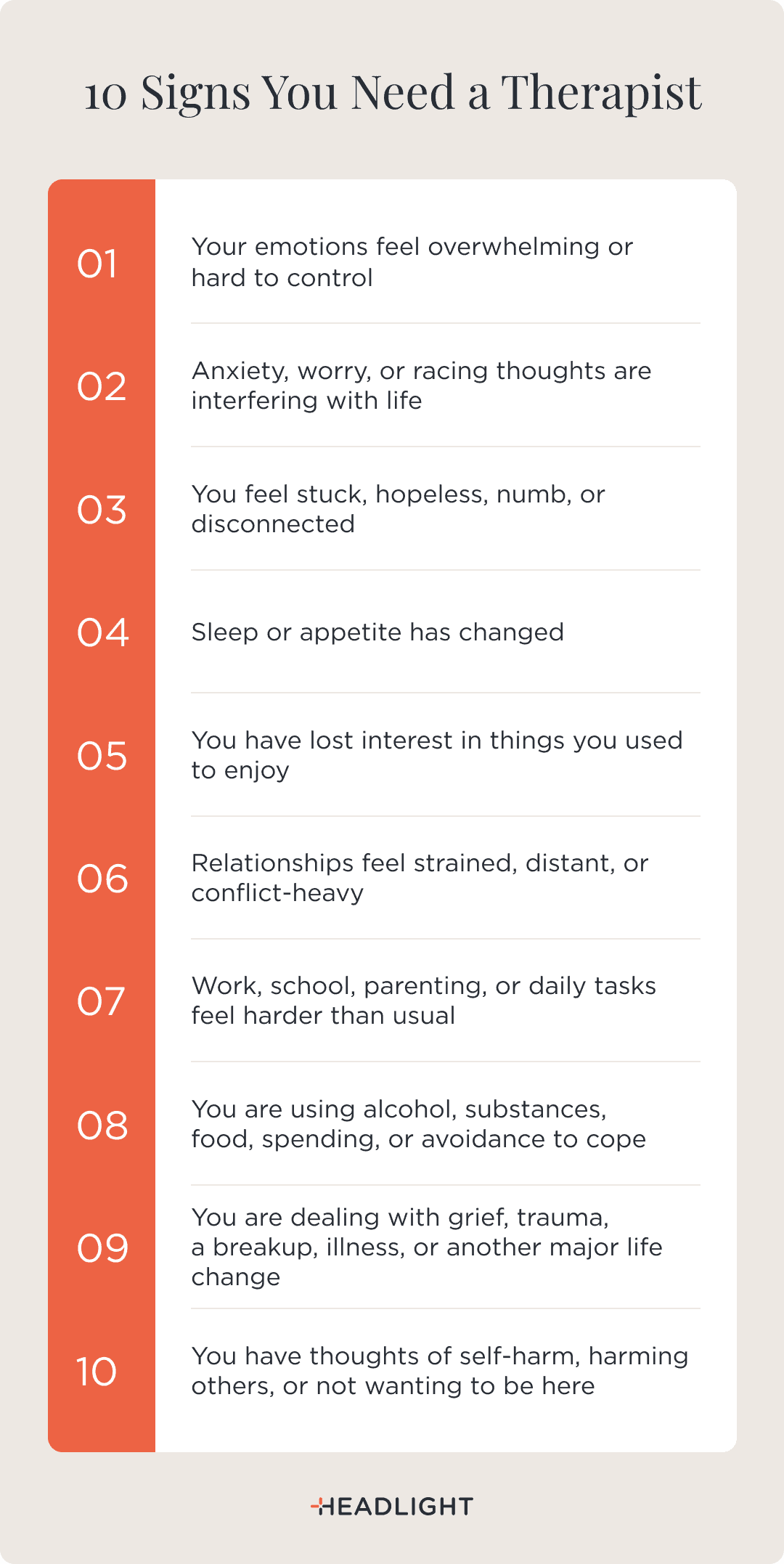
Some signs you need a therapist include:
- Your emotions feel overwhelming or hard to control
- Anxiety, worry, or racing thoughts are interfering with life
- You feel stuck, hopeless, numb, or disconnected
- Sleep or appetite has changed
- You have lost interest in things you used to enjoy
- Relationships feel strained, distant, or conflict-heavy
- Work, school, parenting, or daily tasks feel harder than usual
- You are using alcohol, substances, food, spending, or avoidance to cope
- You are dealing with grief, trauma, a breakup, illness, or another major life change
- You have thoughts of self-harm, harming others, or not wanting to be here
Keep in mind that even one symptom from this list can significantly affect your quality of life and if it does may indicate when to see a therapist. “Left unaddressed, a single symptom can create a domino effect, contributing to additional emotional, physical, or behavioral challenges over time,” says Dr. Serani.
How to know if you need therapy or another kind of support
Not every difficult season requires therapy. Sometimes, other support can be beneficial to your mental well-being, including friends and family who can provide comfort, perspective, and connection or peers you trust who can offer understanding based on shared experiences. “Children and adults alike need encouragement, stability, and compassionate care during challenging times so each of these support systems offers meaningful help,” says Dr. Serani.
When that isn’t enough, therapy can offer trained, confidential, structured support from a qualified professional and if clinically appropriate, medication management.
“Used together, these different types of support create a healing circle that surrounds you with care,” Dr. Serani says. However, not everyone has access to all of these resources at all times. When that happens, she says there are still ways to care for your emotional well-being and build support in manageable steps, including:
- Start with what you do have. Even one supportive person or resource can make a meaningful difference. Focus on strengthening that connection first.
- Reach out in small ways. You don’t have to explain everything at once to your friend or family member. A simple text like, “I’m having a hard time,” or “Can I talk with you for some support,” can start a healing bond.
- Use structured resources. Formal therapy, community support groups, and school or work resources can provide consistent guidance even if personal support feels limited.
- Build daily coping habits. Focusing on a good sleep routine, eating nutritionally, moving your body, and journaling can help ground you during challenging times.
- Be gentle with expectations. You don’t need a large support system to get through difficult periods. Supportive networks can be built gradually over time.
When support from friends, family, and peers, or following routines and engaging in self-help are not enough, therapy may be a better fit. Here’s how to know if you need therapy:
- patterns keep repeating
- symptoms are getting worse
- loved ones are worried
- coping strategies are not working
- you want support from someone neutral and trained
Should I go to therapy if I’m not in crisis?
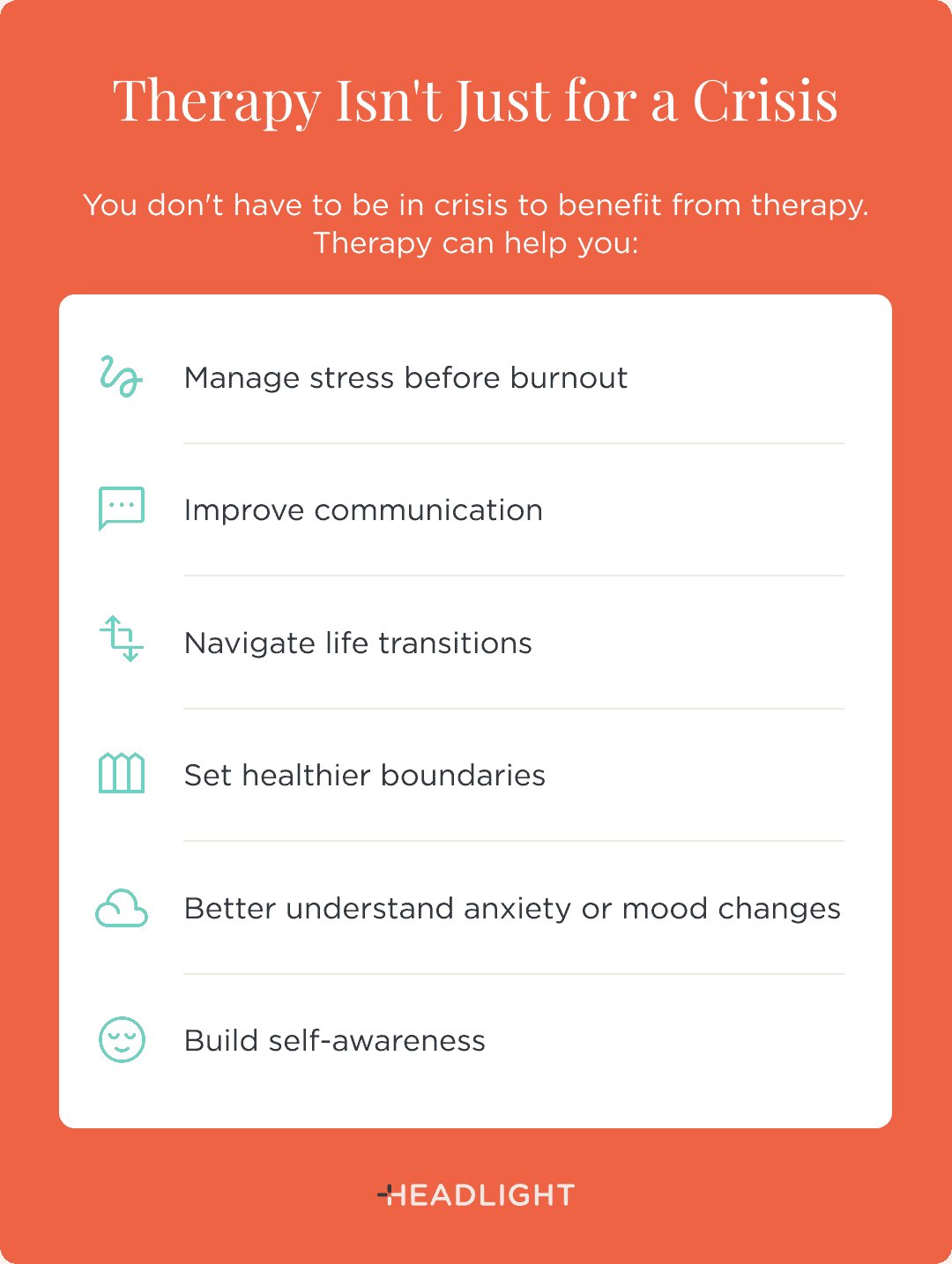
Yes. Therapy isn’t only for a crisis. In fact, research shows that early response to therapy is a reliable prognostic indicator for depression and anxiety treatment outcomes. Therapy can be helpful for the following:
- managing stress before burnout
- improving communication
- processing a transition
- learning boundaries
- understanding anxiety or mood changes
- building self-awareness
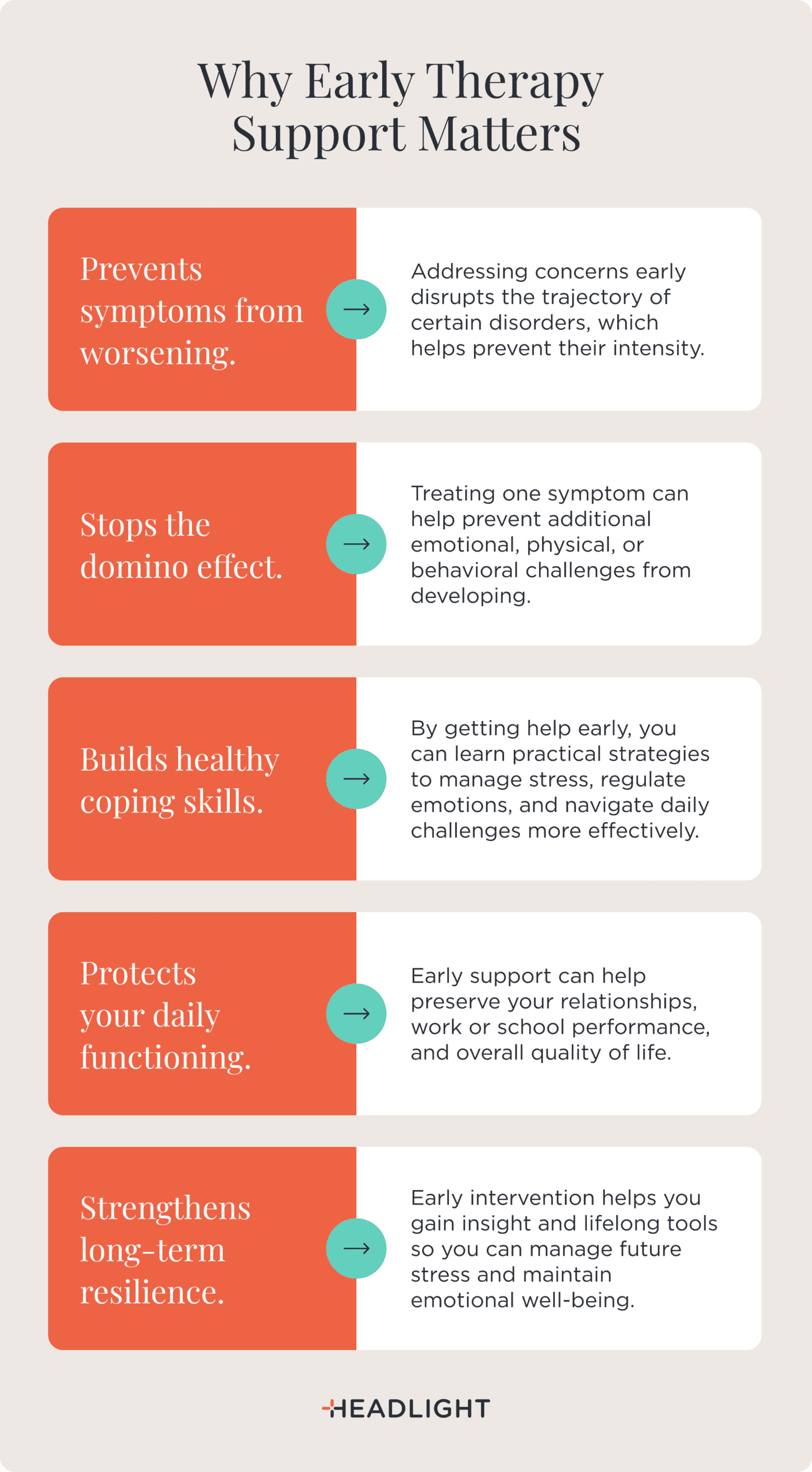
“Once you identify what your strengths and vulnerabilities are in therapy sessions, that knowledge can be a blueprint to build skills,” says Dr. Serani. She says treating early symptoms:
- Prevents symptoms from worsening. Addressing concerns early disrupts the trajectory of certain disorders, which helps prevent their intensity.
- Stops the domino effect. Treating one symptom can help prevent additional emotional, physical, or behavioral challenges from developing.
- Builds healthy coping skills. By getting help early, you can learn practical strategies to manage stress, regulate emotions, and navigate daily challenges more effectively.
- Protects your daily functioning. Early support can help preserve your relationships, work or school performance, and overall quality of life.
- Strengthens long-term resilience. Early intervention helps you gain insight and lifelong tools so you can manage future stress and maintain emotional well-being.
When to see a therapist vs. a psychiatrist
Therapists and psychiatrists are both mental health professionals who can help with moderate to severe symptoms or symptoms that affect daily functioning. However, they often have different levels of education and different scopes of practice.
A psychiatrist or medication-management clinician can diagnose mental health conditions, conduct medication evaluation, prescribe medication, and monitor medication.
“Sometimes, it might make more sense to try out therapy without medication first to see if behavioral intervention helps to mitigate symptoms and functional impairments,” says Chesser.
This would typically be the case if symptoms seem to be on the milder end of the spectrum and functional impairments appear to be relatively low, she says. “If you’re still finding yourself in the same spot with symptoms and functional impairments after a few months of regularly attending therapy, it might be a good time to discuss medication with your clinician,” says Chesser.
Medication support may be worth discussing if you are experiencing:
- panic attacks
- severe depression
- persistent insomnia
- symptoms not improving with therapy alone
- bipolar symptoms
- intrusive thoughts
- major functional impairment
In some instances, Chesser says it might make more sense to try medication in conjunction with the start of therapy. This can directly address the potential biological aspects of the presenting problem, which could then help establish a higher baseline to create behavioral changes aimed at mitigating symptoms and functional impairments. “This would typically be the case if symptoms seem to be on the more moderate to severe end of the spectrum and functional impairments appear to be moderate to severe,” she says.
Ultimately, she says taking medication is a personal decision, and discussing it with your clinician does not mean you will need to take it. “I’d always encourage open communication and asking questions to figure out what makes the most sense for you,” Chesser says.
Headlight can help connect you with a clinician who offers therapy and medication management options.
What happens in therapy?
To help ease concerns about what happens during therapy, keep in mind that the first visit is a conversation, not a test, and that you can share openly or cautiously at your own pace. Consider these first-session basics:
- talk about why you are there
- discuss goals
- review symptoms and medical history
- ask questions
- decide what support may help
You may also discuss that therapy may include:
- coping skills
- communication practice
- identifying patterns
- processing grief or trauma
- building emotional awareness
- creating small next steps
As you get a feel for the clinician, sometimes the first person you meet with is a good fit, and sometimes they’re not. “Therapy involves discussing very personal and uncomfortable things, and if you do not feel that your therapist is a good fit to discuss these things, then it’s okay to seek out support from another clinician who may feel like a better fit,” says Chesser.
How to start therapy when you feel unsure
As you prepare for your first therapy session, the following steps might help you feel prepared:
- Write down what feels hardest right now.
- Note how long it has been going on.
- List what you have already tried.
- Decide preferences, such as virtual or in-person sessions, therapist background and availability, and whether they take insurance or not.
- Book an initial appointment.
- Bring questions to the first session.
“It is absolutely okay to ask the therapist questions. Different therapists carry different approaches to treatment, and there’s no one-size-fits-all to therapy,” says Chesser. “Similarly, different clients carry different preferences and goals to therapy.”
During a first session, she suggests asking the clinician about their approach to treatment to see if it lines up with your personal preferences and goals. You can also ask if they can accommodate your preferences if it seems that they don’t quite line up. “The therapist will let you know if this can be done or not. If not, then you can always seek out a different clinician if you feel it wouldn’t be a good fit,” says Chesser.
Sample questions to ask might include:
- What kind of therapy do you use?
- Have you worked with concerns like mine?
- How will we set goals?
- What should I expect after the first few sessions?
At Headlight, our care coordinators and intake process can help match you with the right type of support.
When to seek urgent mental health support
It’s time to seek urgent support if you experience:
- thoughts of suicide
- thoughts of self-harm
- thoughts of harming someone else
- feeling unable to stay safe
- hallucinations or paranoia
- severe panic that feels unmanageable
- escalating substance use or substance withdrawal
- abuse or unsafe home situation
Crisis resources:
- Call or text 988 for immediate emotional support.
- Call 911 or go to the ER for an emergency.
Reaching out quickly is a safety step, not a failure. Typically, urgent mental health support involves an assessment and explanation of next steps. “Seeking urgent mental health support can be a scary and intimidating process, but this support is intended to keep you and those around you safe and can provide resources for ongoing support,” says Chesser.
Frequently asked questions (FAQs)
What if I feel nervous before my first therapy session?
To ease nerves before your first session, consider trying one or a few of the following:
- Write down what feels hardest right now.
- Note how long it has been going on.
- List what you have already tried.
- Decide preferences, such as virtual or in-person sessions, therapist background and availability, and whether they take insurance or not.
- Book an initial appointment.
- Bring questions to the first session.
Can therapy help if I don’t know what’s wrong?
Yes. Many people feel “off”, “stuck,” or “tired” without having a clear reason.You don’t need a diagnosis to go to therapy. In fact, a clinician can help you understand what is happening, even if you can’t initially label what you’re going through or the reasons why. They can help you identify the stressful issues, how to rework them, and help you find your comfort zone again with practical tools.
Can I switch therapists if it doesn’t feel right?
Definitely. Sometimes the first clinician you meet with isn’t a good fit for you and sometimes as you learn more about a clinician, you realize you don’t connect. It’s ok to find someone else who makes you more comfortable and who you relate to. Since all Headlight therapists are covered by the same insurance and appointment scheduling is done by the same centralized team, it’s easy to switch and there are many clinicians to choose from.
Deep dive recommendations
https://www.nimh.nih.gov/health/topics/caring-for-your-mental-health