
What Is Medication Management in Psychiatry?
- Category: General
- November 16, 2026
Key takeaways
- Medication management is part of psychiatric care where a physician may prescribe a psychiatric medication to manage a diagnosed mental health condition.
- Often therapy and medication management are used together, as medication can reduce symptoms and may help you be more receptive to changes that you’re working on in therapy.
- Responsible medication management involves a psychiatric evaluation, possible prescription, and ongoing follow-ups to assess the medication’s effectiveness and side effects to make sure you’re on the best treatment plan for you.
Medication can be a powerful part of treatment, helping lessen symptoms of conditions like depression and anxiety. As those symptoms start to lift, you may be more receptive to therapy and more able and willing to take the lessons learned in sessions and incorporate them into your life.
As someone who takes an antidepressant to manage generalized anxiety, I know that first-hand. I’m also well aware that going on a mental health medication doesn’t mean getting a prescription and you’re done. It’s a process called medication management, which involves working with a prescribing clinician, such as a psychiatrist, to identify a medication that is effective for you and one that limits side effects. This process can take time, which is why it’s a good idea to have a trusted specialist working with you along the way.
Taking a mental health medication is common — one in six adults in the U.S. took a prescription for their mental health in the past year, per the Centers for Disease Control and Prevention. In this article, learn more about what medication management is, how it works with therapy, clinicians who prescribe it, and how Headlight can help.
What is medication management in psychiatry?
Mental health care can look like different things for different people. There are two main approaches to treatment: therapy and medication.
Therapy: Helps you identify and talk about emotional and psychological challenges to help understand yourself better, develop new thinking patterns, and improve coping skills. There are many types of therapy, such as cognitive behavioral therapy and dialectical behavior therapy (DBT). You’ll talk to a licensed professional, such as a psychologist, social worker, or counselor.
Medication management: Medications can affect your body physiology and your brain chemistry to help reduce certain mental health symptoms, according to the American Psychiatric Association (APA). There are different medications typically used depending on your diagnoses. Management refers to the need for ongoing medical visits with your prescribing doctor to track how well you’re responding to it and help with side effects. This physician will also adjust your dose or change your medication if needed.
Medication management vs. therapy: how they work together
“Therapy and medications often work together to create wonderful results,” says Headlight psychiatrist and Chief Medical Officer Chaitanya Pabbati, MD. “Medications in psychiatry can help change the way your brain functions to create a healthier version of yourself,” he explains.
Psychiatric medications won’t change who you are, but they can favorably alter your brain chemistry. This can help you be more open to the work that happens in therapy that allows you to improve yourself. “Medications simply help break down some of the barriers towards reaching those goals,” says Dr. Pabbati.
There is no one-size-fits-all approach to mental health, Dr. Pabbati says. “Medications and therapy both have roles to play — and [they play] different roles for different people.”
Who provides psychiatric medication management?
Several healthcare professionals can prescribe psychiatric medication, according to the National Alliance on Mental Illness (NAMI). This individual should also monitor you closely during the duration of medication treatment:
- Psychiatrist: Has an MD or DO and completed residency training in psychiatry
- Psychiatric nurse practitioner: Has an MS (master of science) or PhD in nursing and specializes in psychiatry. May also have a PMHNP-BC, which is a board certification in psychiatric nursing. Can prescribe medications depending on the state.
- Primary care physician (PCP): Has an MD or DO.
- Family nurse practitioner (FNP): Has an MS or PhD. Can prescribe medications depending on the state.
- Psychiatric pharmacist: Has a PharmD, may also be a board-certified psychiatric pharmacist. Can prescribe medications depending on the state.
Headlight’s prescribing clinicians include physicians (MD/DO) and nurse practitioners (PHMNP/DNP). The reassuring piece of Headlight’s medication management approach is that after your initial evaluation, you will have appointments with the same clinician every time.
Common mental health medications and what they treat
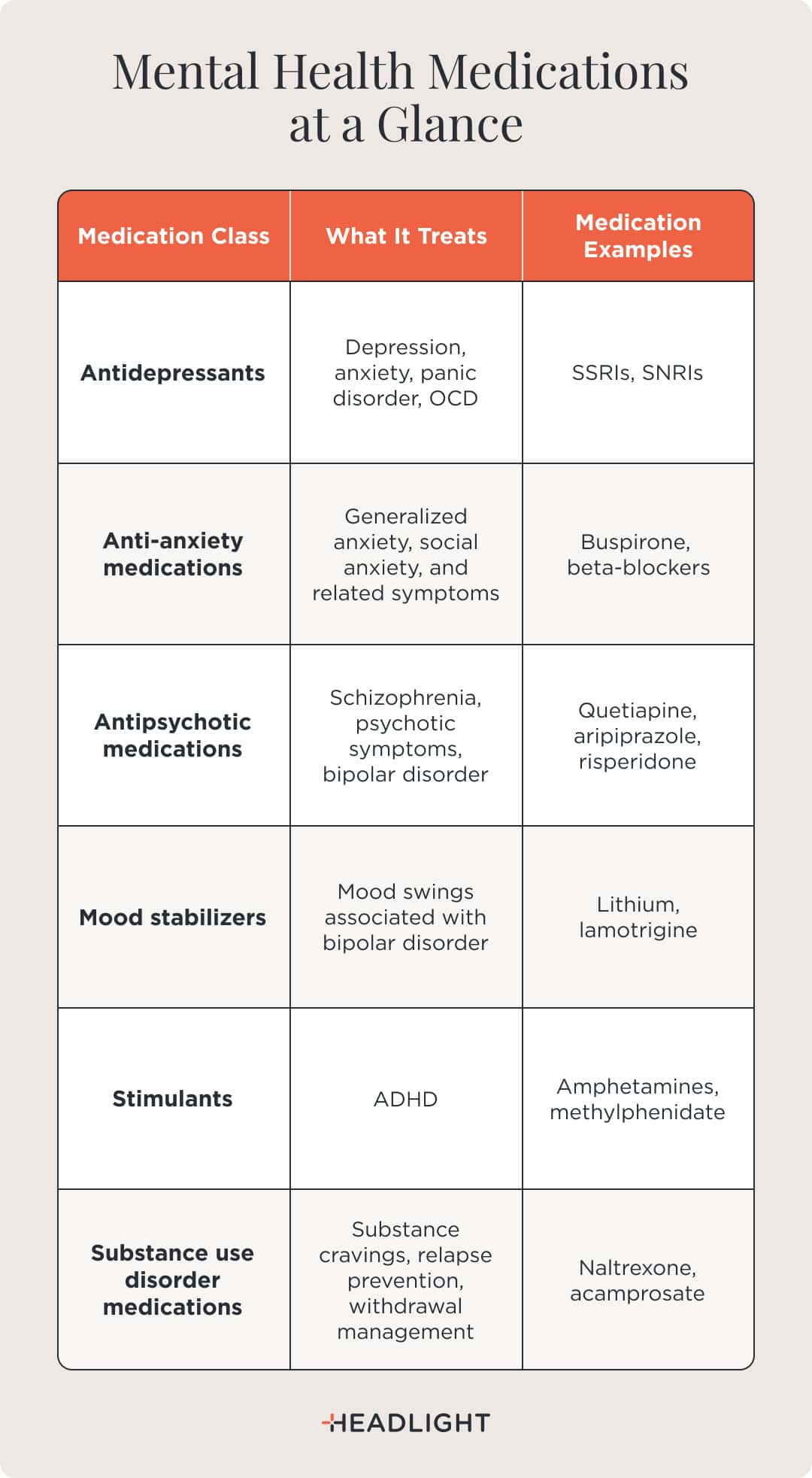
According to the APA, there are six main categories of psychiatric medications that are prescribed to treat mental health and substance use disorders.
- Antidepressants: Treat depression, panic disorder, generalized anxiety disorder, obsessive-compulsive disorder (OCD), and more.
Examples: Serotonin reuptake inhibitors (SSRIs) and serotonin-norepinephrine reuptake inhibitors (SNRIs)
- Anti-anxiety medications: Treat anxiety disorders like generalized anxiety disorder, social anxiety disorder, OCD, and PTSD.
Examples: Beta-blockers, buspirone
- Antipsychotic medications: Treat psychotic symptoms like delusions and hallucinations in schizophrenia and manic and depressive symptoms in bipolar disorder.
Examples: Quetiapine, aripiprazole, risperidone.
- Mood stabilizers: Treat mood swings in bipolar disorder.
Examples: Lithium and anticonvulsants like lamotrigine
- Stimulants: Treat attention-deficit/hyperactivity disorder (ADHD)
Examples: Amphetamines and methylphenidates
- Substance use disorder medications: Treat cravings and helps manage withdrawal symptoms
Examples: Naltrexone and acamprosate
What happens at a medication management appointment?
Mental health medication needs to be prescribed in a thoughtful way that centers your wellbeing and goals in the conversation. It’s more than a doctor “putting you on meds.” You can ask questions, express worries and fears, and say no to a medication.
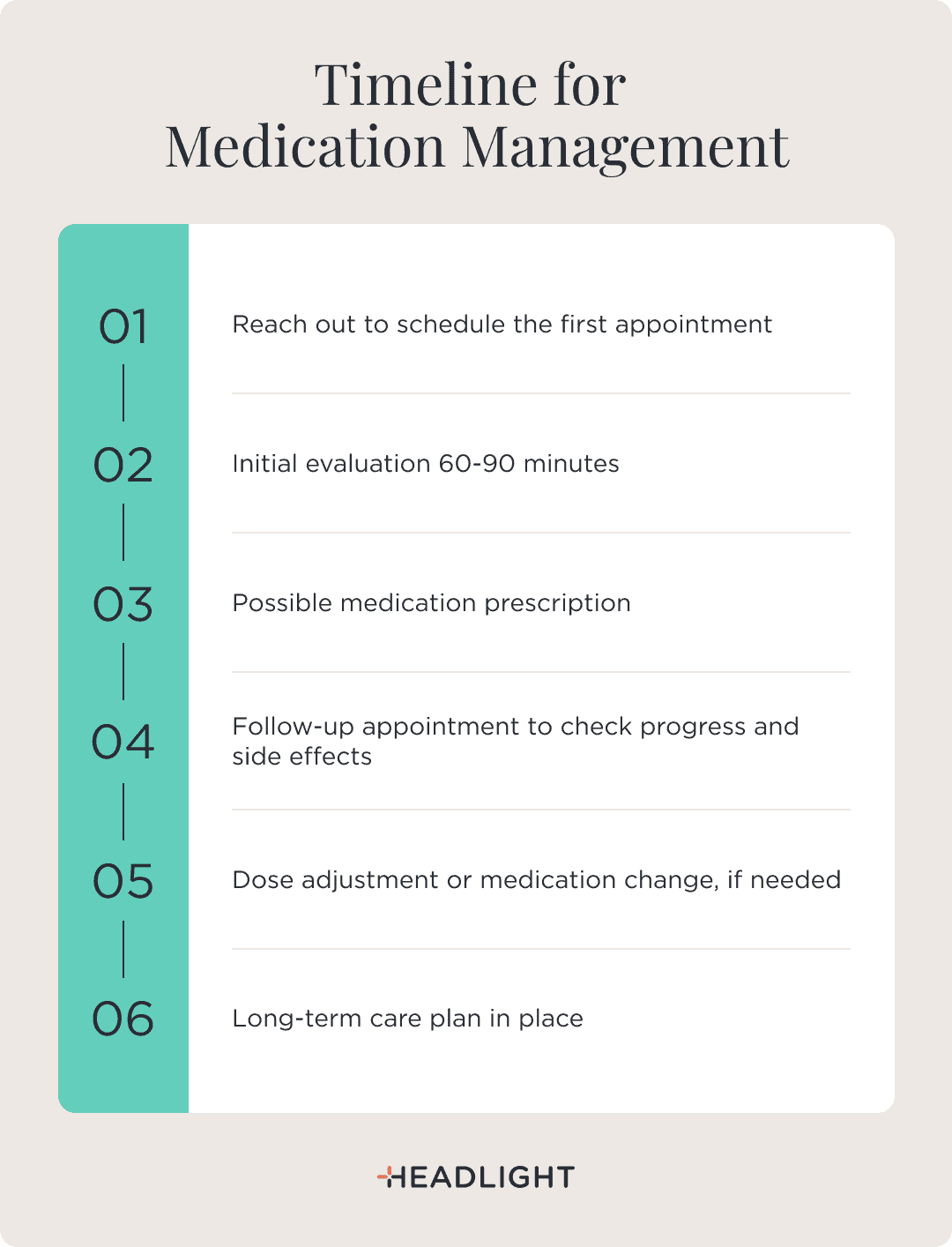
The first visit with a medication management psychiatrist will be a longer psychiatric evaluation, with regular follow-ups to assess how well you’re doing on medication or what changes are needed.
Timeline for Medication Management
- Reach out to schedule the first appointment
- Initial evaluation 60-90 minutes
- Possible medication prescription
- Follow-up appointment to check progress and side effects
- Dose adjustment or medication change, if needed
- Long-term care plan in place
Your first appointment
The first appointment will differ depending on who you see, but we can fill you in on the initial Headlight appointment. Here’s what you can expect:
- A comprehensive evaluation, discussing your medical history and symptoms. Bring a list (or the physical bottle) of current medications and supplements you’re taking. Review your medication history if you’ve taken mental health medications in the past.
- A discussion about your goals for treatment
- Recommendations on medication or additional treatments
This appointment will last 60 to 90 minutes, which is one key difference between therapy and psychiatry sessions.
When assessing your fit for any medication, your psychiatrist or psychiatric nurse practitioner will discuss the risks, benefits, and alternatives. “This is a deeply personal discussion,” says Dr. Pabbati. For example, consider a medication that causes drowsiness as a side effect. That might not be a big deal for some folks, but it might not be good for a parent with a young child who they spend time waking up for and caring for at night, he says. Cost can also be a big factor for some people, while others are able or willing to pay for a more expensive medication in order to have less potential side effects.
Your prescribing clinician will also talk to you about alternatives. Alternative medication options come into play if the medication isn’t as effective as you’re looking for or if side effects aren’t tolerable. Overall, it is you and the psychiatrist who are working together. “The discussion should be one of mutual collaboration, and one that includes second and third steps,” Dr. Pabbati says.
Follow-up appointments
Follow-up psychiatry appointments last about 15 to 30 minutes. Talk to your psychiatrist about how often you’ll need to schedule follow-up appointments, which will differ depending on if it’s assessing a new medication or dose or if it’s a short check-in because you’re stable on the medication.
Expect to talk about your symptoms, side effects, and any other pertinent info, such as changes to your schedule or life circumstances that would affect your medication. You can also get refills at this time.

How long does it take to find the right medication?
Medications require time to take effect, says Dr. Pabbati. It can also be difficult to track day-to-day changes, they can be so minor. “It may not be until weeks or months later that you see the benefits.”
One thing to remember is that you’ll need to take these medications every day for a few weeks — not only when you have symptoms — to experience the full benefits, per the organization Mental Health America.
The effect these medications have is highly individualized, and some people won’t respond to a particular medication or at all. About 60% of people starting a medication for depression need to try more than one, says NAMI.
According to NAMI, if you feel that a medication isn’t working or you have side effects, then talk to your prescriber who can provide options such as changing your medication, adjusting it to decrease side effects, or monitoring side effects — as many will go away and may not be reason alone to stop a med.
Side effects, safety, and staying on track
After starting a new medication, you may start to see side effects within 48 to 72 hours, says Dr. Pabbati.
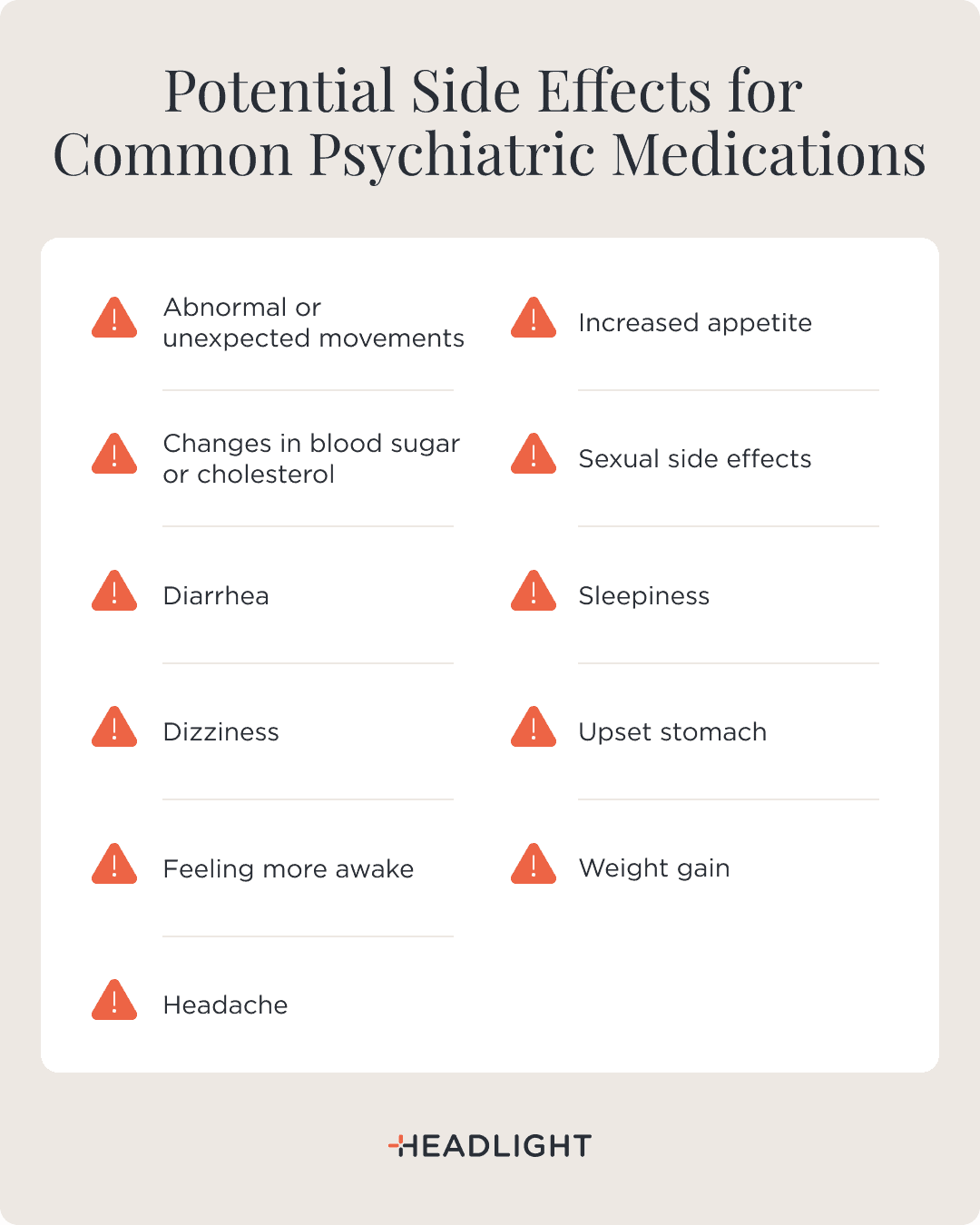
Side effects vary depending on the class of medication you’re taking. However, per NAMI, side effects for common psychiatric medications include:
- Abnormal or unexpected movements
- Changes in blood sugar or cholesterol
- Diarrhea
- Dizziness
- Feeling more awake
- Headache
- Increased appetite
- Sexual side effects
- Sleepiness
- Upset stomach
- Weight gain
Many side effects will go away on their own, and Dr. Pabbati encourages patients to keep this in mind as they start on a new medication. “The presence of a side effect early on does not mean that it will remain for the duration of treatment.” Increasing your dose may also bring out those side effects again, but this is also typically temporary.
One thing that psychiatrists stress is changing one thing at a time. “It’s best to avoid making multiple changes at once. [This approach] allows us to monitor for side effects and know which change contributed to it,” says Dr. Pabbati.
Signs it may be time to consider medication management
If you’re considering how medication might help you, you can always feel free to talk to your PCP or therapist. Depending on who you talk to, they can either provide you with more information or connect you with a possible prescriber for an evaluation.
Some signs suggest that it might be time to make that call: “Medications should be considered in any situation where a patient is struggling to make progress in their treatment or is having such debilitating or disruptive symptoms that they are unable to put forth the effort to move forward,” says Dr. Pabbati.
Remember, an evaluation is not a commitment to take medication. It’s there to help you explore your options and talk with an expert about what might be right for you.
How much does medication management cost, and does insurance cover it?
There will be two separate costs to you involving medication management: cost of the appointment with a prescriber and the medications themselves.
Consult your insurance plan benefits for how these appointments are covered for you. You can also look into employee benefits, as some companies include partnerships with mental health care companies, so this may be available at free or reduced charge to you.
In addition, cost of medications or appointments depends on factors like your deductible, coinsurance, and copay. To decrease prices of medications, there are several savings opportunities, such as manufacturer coupons, prescription savings programs, third-party discount programs, and patient assistance programs, per NAMI.
Medication management at Headlight
Headlight provides both in-person and virtual medication management along with therapy. Psychiatrists or psychiatric nurse practitioners assess, prescribe, and monitor mental health medications.
You can pair individual therapy with psychiatry and medication management at Headlight, which allows you to streamline and coordinate care. If you’re interested in med management, you can see a psychiatrist at Headlight without a referral.
If you’re ready to take the next step, here’s how you can find care and get support.
If you need help now for a mental health crises, don’t wait: Reach out ot the 988 Suicide & Crisis Lifeline via text, call, or chat.
Frequently asked questions (FAQs)
Will a psychiatrist prescribe medication on the first visit?
A psychiatrist might prescribe medication on the first visit. However, they only write a prescription after a medical and symptom evaluation and determine that a medication might be appropriate to treat your mental health condition.
Can I ask my psychiatrist for a specific medication?
Absolutely. The conversation you have with your psychiatrist should be open where you express preferences, including asking about a specific medication. Your psychiatrist may or may not prescribe that specific medication because it depends on your diagnosis, symptoms, and medical history. However, they’ll be able to explain why and recommend something else.
Can an online psychiatrist prescribe medication?
Yes, a psychiatrist can meet with you via a telehealth appointment to prescribe a mental health medication.
Deep dive recommendations
- https://www.nimh.nih.gov/health/topics/mental-health-medications
- https://www.nami.org/treatments-and-approaches/mental-health-medications/
- https://www.psychiatry.org/patients-families/what-is-psychiatry
See our editorial policy here.