
20 Under-Recognized Signs of ADHD in Women
- Category: ADHD
- June 12, 2026
Key takeaways
- The “disruptive boy” stereotype of ADHD is outdated and doesn’t reflect the way ADHD shows up in many women.
- ADHD misconceptions, along with gender bias and differing symptom profiles, contribute to delayed and missed diagnosis of ADHD among women.
- Women with ADHD tend to internalize their symptoms more than men. They’re less likely to be outwardly hyperactive, and more likely to be inattentive, which is easier to mask or compensate for.
- Many women with ADHD spend years compensating for their symptoms with perfectionist tendencies and only seek help once they struggle during big life transitions or self-diagnose based on social media posts.
- Headlight can assist with ADHD diagnosis and management for women. You deserve answers and support throughout your mental health journey, and Headlight is here to help.
Clutter, missed deadlines, running late, procrastination, and emotional overwhelm…does this sound like you? There are many signs of ADHD in women, but unfortunately they’re easily missed. Often, symptoms of ADHD in women are brushed off as simply personality traits, or even glossed over with unfair stereotypes that women are more emotional or spacy. The truth is that ADHD can look different in women than it does in men. Understanding these differences can set you on the path to diagnosis, treatment, and feeling better.
When people think of ADHD, they may think of hyperactive little boys. That is certainly one population where ADHD can present, but it’s a limited view of the overall condition that misses the many nuanced signs of ADHD in adult women.
“Women’s ADHD symptoms tend to be more internalized, while symptoms in men are more often externalized,” explains Juliann Dorsey, PsyD, a Headlight clinician specialized in ADHD.
In other words, women with ADHD might look high-functioning from the outside, but be barely holding it together on the inside, struggling to balance the demands of life with years of overcompensating.
Personally speaking, three of my best female friends were diagnosed with ADHD in our 20s and 30s. Each of them expressed that the diagnosis felt like patterns across their childhood finally clicked together.
All three of my friends did well in school, and none of them displayed the disruptive behaviors that many people associate with ADHD (rather than interrupting the teacher, they were often day-dreaming in the corner). Instead, their ADHD signs flew under-the-radar: procrastination, perfectionism, forgetfulness, running late, the list goes on.
That story certainly isn’t unique to my childhood besties, but it does serve as an example that ADHD symptoms can go unrecognized in women. Many adult women find themselves at life transitions struggling with undiagnosed ADHD, and perhaps seeking help because they’ve seen their issues reflected in social media posts about ADHD in women.
This article covers signs of ADHD in women, and how to seek diagnosis and treatment.
20 Signs of ADHD in women: what to look for
Overall, ADHD in women may look more subtle, and not always match up to preconceived notions of what ADHD “should” look like.
Using broad strokes, some ways that ADHD can look different in women include:
- More inattentive symptoms
- Hyperactivity that’s less obvious
- Overlap with anxiety or depression
- Social pressure to mask symptoms, or overcompensate with perfectionism
Zooming in, there are a lot of ways ADHD might be affecting your day-to-day life as a woman, but they might feel easy to brush off. “Because ADHD symptoms in women are often more internalized and easier to mask, the functional impact isn’t as obvious,” says Dr. Dorsey.
Common signs of ADHD in women include:
- Difficulty focusing during conversations, meetings, reading, or daily tasks
- Losing track of appointments or personal items
- Chronic disorganization at home or in work or school
- Missed deadlines
- Difficulty prioritizing
- Procrastination
- Inconsistent performance
- Clutter buildup
- Forgotten chores
- Unpaid bills
- Overwhelming routines
- Interrupting
- Forgetting plans
- Emotional reactivity
- Feeling misunderstood
- Sensory overload
- Schedule stress
- Difficulty managing everyone’s needs
- Greater incidence of disordered/impulsive eating
- Emotional overwhelm: Quick frustration, rejection sensitivity, mood shifts, feeling easily flooded
- Internal restlessness: Racing thoughts, trouble relaxing, feeling “on” all the time
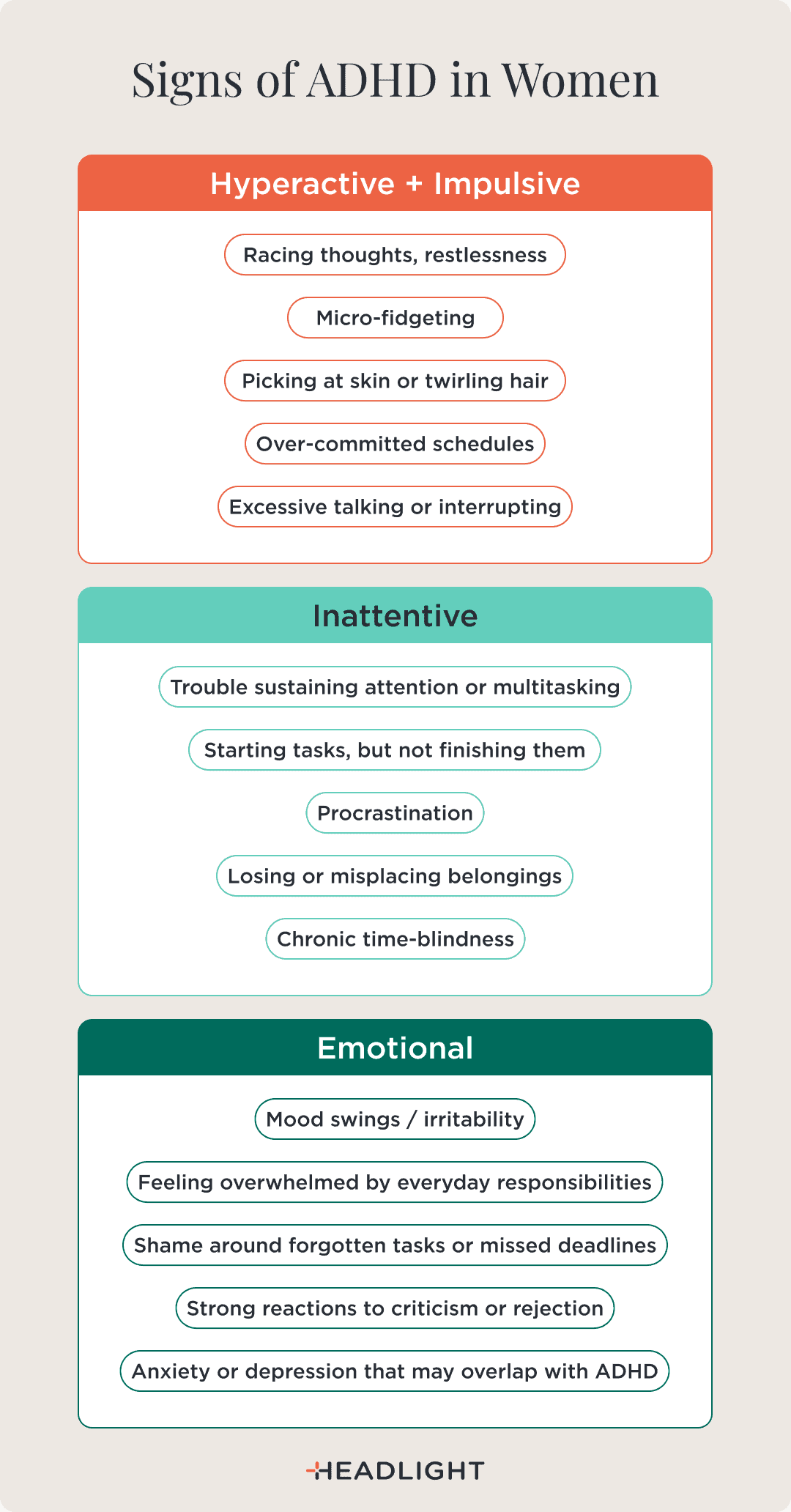
Hyperactive and Impulsive ADHD symptoms in women
Hyperactive-impulsive is one subtype of ADHD, but it can be easily missed in women. This is a good example of women internalizing symptoms, rather than externalizing them.
Hyperactivity in women is often not immediately visible to others. It can look less like outward disruptions, and more like:
- Racing thoughts
- Internal restlessness
- Constant sense of urgency
- Feeling “keyed up”
- Fidgeting
- Picking at skin or twirling hair
- Over-committed schedules
- Excessive talking (being labeled “bubbly” or “intense”)
- Interrupting
- Burnout from the above
Impulsivity can also show up differently in women. It can look like:
- Alcohol or substance use (to help regulate internal restlessness)
- Compulsive shopping, gambling, gaming, or social media/internet use
- Earlier sexual activity and more partners
- Reckless driving
- Restrictive or binge eating
- Riskier sexual behaviors
- Self-harm
- Suddenly cutting off friendships
This isn’t to say that men don’t have these symptoms of ADHD too, but overall hyperactive-impulsive symptoms of ADHD tend to be less severe and more internalized in women.
Inattentive ADHD symptoms in women
Inattentive is the second subtype of ADHD (the third type, combined, has symptoms of both inattentive and hyperactive ADHD).
Symptoms of inattention can be easy to miss or cover up, which can contribute to delayed diagnosis—more on that later.
Inattentive ADHD symptoms in women can look like:
- Trouble sustaining attention
- Easily getting distracted
- Difficulty multitasking
- Starting tasks, but not finishing them
- Zoning out during conversations or meetings
- Procrastination
- Avoiding tasks that require sustained mental effort
- Losing or misplacing belongings
- Missing appointments or social meetups
- Chronic time-blindness
- Feeling mentally scattered (even when trying hard)
Emotional signs of ADHD in adult women
Difficulty regulating emotions is estimated to affect up to 70% of people with ADHD, and may be more severe for women. Unfortunately, women in general are frequently labeled as overly emotional, leading these very real symptoms to be ignored or dismissed.
Some emotional signs of ADHD in adult women include:
- Mood swings
- Irritability
- Trouble calming down after stress
- Feeling overwhelmed by everyday responsibilities
- Shame (related to forgotten tasks, missed deadlines, or other ADHD symptoms)
- Strong reactions to criticism or rejection
- Anxiety or depression that may overlap with ADHD
Why ADHD symptoms in women are often missed
ADHD symptoms in women are often missed during childhood, leading to later-in-life diagnosis during times of life transition or stress (such as college, parenting, career change, or perimenopause).
You’re probably wondering why this happens. The answer is complicated, but relates to:
- Gender bias and differing societal standards for women
- ADHD research based on young boys
- Predominance of inattentive symptoms among women
- Women more likely to mask with perfectionism
Let’s dig into those reasons a bit more.
A primary reason for ADHD being missed in women is that the research ADHD diagnosis was originally based on, and which informs much of the public understanding of ADHD today, was done on elementary school-aged boys. “[These studies] emphasize behaviors that are more visible in classroom settings—things like being disruptive, getting out of their seat, or interrupting,” explains Dr. Dorsey.
In contrast, ADHD symptoms in women and girls may appear less disruptive than these stereotypical symptoms. “Girls with ADHD are more likely to be described as daydreaming, talking a lot with friends, or appearing to do fine at school, only to fall apart once they get home,” says Dr. Dorsey.
More recent studies show us that women with ADHD frequently have symptoms of inattention. This can often be mistaken for spaciness, lack of motivation or effort, or simply a personality trait rather than a symptom of a challenging mental health condition.
Inattention is also easier to mask than the classic signs of hyperactivity. This, combined with societal standards for women to present themselves a certain way (polite, friendly, but not too loud), mean that girls may subconsciously learn from a young age to mask their ADHD symptoms.
“Many women have been masking for years, sometimes decades, and can appear calm and put-together on the outside while feeling chaotic and restless internally,” says Dr. Dorsey.
Women with ADHD may develop perfectionist tendencies to cope with the shame or self-blame they experience due to their undiagnosed ADHD. This can look like excessive to-do lists and calendar alerts, working long hours, people-pleasing, or checking things over and over again.
Hormones can influence ADHD in women
Hormonal shifts and cycles are an added layer when it comes to female ADHD symptoms.
In the week before your period, hormone levels drop and symptoms of emotional dysregulation and impulsivity can worsen if you have ADHD (and no, it isn’t just “normal” PMS!).
Perimenopause is another important piece of the puzzle to consider. “ADHD symptoms often get worse during this time,” says Dr. Dorsey, who’s had several clients who didn’t start questioning ADHD until their late 30s and early 40s, when they entered perimenopause.
“Hormonal changes [during perimenopause] can lead to brain fog, sleep issues, and other challenges that can look a lot like ADHD,” she explains. That’s why a careful interview during the diagnosis process is so important. This can uncover whether these symptoms were present in some way since childhood, or if they’re brand new.
“In many cases, they were there all along but became more noticeable as symptoms intensified with hormonal changes,” she explains.
When to seek help for ADHD symptoms
If you are reading this article because you’re concerned about symptoms of ADHD in yourself (or perhaps a female friend, partner, or family member), then that’s already a sign that it could be worth seeking help.
Consider reaching out to someone—such as the therapists at Headlight—if you’re experiencing symptoms that impact:
- Work
- School
- Relationships
- Parenting
- Finances
- Self-esteem
- Daily routines and self-care
Perhaps you feel constantly overwhelmed, or unable to keep up with that ever-growing pile of life admin despite trying your hardest. Or, maybe you feel burned out from perfectionism, or anxious that you’ll be forgetful and let someone down again.
Even if you don’t end up having ADHD, these are all signs that something’s up, and you could use a little more support for your mental health.
How ADHD is diagnosed in women
Diagnosing ADHD is a complex process. There is no single test that can diagnose ADHD on its own.
Your mental health clinician will typically start by talking to you about your childhood—including how you did in school academically, and any behavioral concerns. Although ADHD can be (and often is) diagnosed in adulthood, there must have been symptoms present before the age of 12.
Then, your mental health clinician will ask you about your current symptoms, and how these are affecting your life. As part of this, they may have you complete various standardized screening tools, such as the Adult ADHD Self-Report Scale (ASRS v1.1) or Wender Utah Rating Scale (WURS).
In addition to following the typical process for ADHD diagnosis, your mental health clinician should also take into account the ways that ADHD can present differently in women. They may ask you more questions to identify inattentive symptoms, or analyze strategies you might be using to mask symptoms.
Differential diagnosis (ruling out other conditions)
An important step in the ADHD diagnosis process is considering other mental health conditions that frequently occur alongside it, or that can mirror its symptoms. “Clarifying the diagnosis and teasing apart ADHD from other co-occurring conditions matters,” says Dr. Dorsey.
Some mental health conditions that frequently occur alongside ADHD in women include:
- Anxiety
- Depression
- PTSD
- Eating disorders
“A lot of this comes down to understanding the timeline and underlying drivers of the symptoms,” says Dr. Dorsey. She provides the example of someone presenting with anxiety. Instead of feeling generally anxious, they may actually be worried about managing situations that feel extra-difficult due to executive functioning challenges (such as time-blindness or difficulty organizing tasks).
Childhood experiences of being overlooked, excluded, or even bullied by peers due to ADHD symptoms can also contribute to the development of mental health conditions like social anxiety or PTSD.
“Asking about timeline, etiology, and these kinds of lived experiences can really help start to piece together a clearer diagnostic picture,” says Dr. Dorsey.
Treatment options for female ADHD symptoms
ADHD treatment happens under the guidance of a licensed mental health clinician or psychiatric clinician, like those who work with Headlight. Treatment for ADHD in women often starts with medication and therapy, but also includes lifestyle changes (like sleep and exercise) and ADHD-focused strategies (like body doubling, routine-building, and task systems).
Medications can only be prescribed by certain healthcare professionals, such as psychiatric clinicians or physicians. Stimulants (like Adderall, Ritalin, or Vyvanse) and non-stimulants (like Intuniv, Qelbree, or Strattera) are the two main classes of medication that are prescribed to reduce ADHD symptoms. In some cases, they may be combined. Some people also choose to manage their ADHD without medication.
Therapy or psychiatry is another key part of treatment for ADHD. In children, this often looks like behavioral therapy and training for parents. Among adults, effective types of therapy include:
- Cognitive behavioral therapy
- Mindfulness-based approaches
- Psychoeducation
- Dialectical-focused therapy
These therapies can not only help you reduce ADHD symptoms and develop coping mechanisms, but they can also help you address the many tough feelings that surface with an ADHD diagnosis.
“Getting an ADHD diagnosis as an adult woman can be a real turning point,” says Dr. Dorsey. “It often opens the door to a level of self-understanding that wasn’t there before.”
Understanding why life has felt so hard can be incredibly validating. On the flip side, that process can bring up lots of grief, anger, and even feelings of loss. “Many women have spent years believing they were lazy, unintelligent, or not good enough, based on inaccurate and often harmful messages they received growing up,” says Dr Dorsey.
Therapy, with a service like Headlight, can help you better understand how ADHD might’ve shaped those childhood experiences, and how you navigate the world today. “[As] those negative beliefs start to loosen, that’s often where meaningful change begins,” says Dr. Dorsey.
How Headlight can help
If you’re a woman with ADHD in the western states, Headlight can match you with therapy or medication management support. Sessions are offered either in-person or virtually, and many insurance plans are accepted. In fact, over 90% of Headlight clients use insurance and only pay a co-pay fee.
If you’re undiagnosed but struggling with signs of ADHD, then the practitioners at Headlight can also help you through the diagnosis process.
The first step is to contact Headlight and start the personalized matching process, which connects you with the right therapist or clinician for you.
Diagnosis and treatment will ultimately depend on your symptoms, medical history, co-occurring conditions, and personal goals.

Frequently asked questions (FAQs)
Can women have ADHD even if they did well in school?
Yes, women can have ADHD even if they did well in school. Many girls and women develop perfectionism or coping mechanisms to manage their ADHD symptoms at a young age. They may keep up with their schoolwork (despite procrastination or disorganization), but be struggling on the inside.
How do I know if it is ADHD or anxiety?
It’s certainly possible to have ADHD and co-occurring anxiety. In other cases, anxiety might be masking ADHD, and contribute to missed or delayed diagnosis. Internalized ADHD symptoms can look a lot like anxiety. Your therapist may ask you questions to figure out the drivers of your anxiety. For example, do you feel anxious due to forgetfulness, getting distracted, or compensating for other executive dysfunctions? Additional symptoms of inattention, hyperactivity, or impulsivity can also point toward an ADHD diagnosis.
What are common ADHD symptoms in women?
Women with ADHD frequently have symptoms of inattention, such as forgetfulness, difficulty multitasking or sustaining attention, losing items, missing appointments, zoning out, procrastinating, running late, or generally feeling mentally scattered or unable to keep up with commitments. Women with ADHD can also have symptoms of hyperactivity, but often these are internalized and can look like racing thoughts, an unfounded sense of urgency, fidgeting, and interrupting, rather than more loud and disruptive behaviors.