
What Does a Psychiatrist Do? (And When You Should See One)
- Category: Medical Approaches
- November 17, 2026
Written by Cathy Cassata
Clinically reviewed by Michael Falcone, PsyD, LMFT
Key takeaways
- Psychiatrists are medically trained physicians who hold either an MD or DO.
- Part of their role is evaluating and ruling out physical conditions that could contribute to mental health disorders.
- As physicians, psychiatrists are qualified to prescribe medications and provide or coordinate psychotherapy.
If you’re struggling with your mood, anxiety, focus, sleep, or another disruptive symptom, a psychiatrist may be able to help. As medical doctors with an MD or DO, psychiatrists specialize in diagnosing, treating, and preventing mental health conditions. They can prescribe medication as well as provide or coordinate therapy. Psychiatrists help with common concerns like depression, anxiety, and sleep problems. They can also provide an adult ADHD evaluation.
“The most important thing for most patients is to find a psychiatrist who is accessible, affordable, and whom they feel comfortable with,” says Chaitanya Pabbati, MD, psychiatrist at Headlight. “In rare instances, it can be necessary to find a psychiatrist or a clinic that is more specialized for specific clinical needs.”
It’s important to note that you do not have to be severely ill, unable to function, or experiencing an emergency to benefit from a psychiatric evaluation, says Avani K. Patel, MD, psychiatrist and member of the APA Council on Communications. “[Seeking] help is not a sign of weakness. It is an opportunity to be proactive about your health.”
This article will cover a psychiatrist’s training, how they differ from psychologists and therapists, what they treat, how treatment works, signs it is time to see a psychiatrist, and what to expect during the first appointment.
What does a psychiatrist do?
Psychiatrists are medical doctors who evaluate symptoms, make diagnoses, create treatment plans, prescribe and monitor medication, and often provide or coordinate therapy.
Because medical conditions can cause or worsen mental health symptoms, psychiatrists look at both physical health and mental health, including medications, sleep, substance use, family history, and life stressors. Dr. Patel says symptoms that resemble anxiety or depression may be associated with thyroid dysfunction, medication effects, sleep disorders, substance use, or other medical conditions. Similarly, symptoms that appear psychiatric may reflect a neurologic disorder or another underlying medical problem.
“Physician training is particularly valuable when the diagnosis is unclear, symptoms are atypical, multiple conditions coexist, or treatment becomes complicated,” Dr. Patel says. “The goal is not simply to prescribe medication. It is to understand what is happening, identify contributing factors, and develop a safe, individualized treatment plan.”
Psychiatrists work in outpatient clinics and group practices like Headlight. They also work in hospitals, community mental health centers, and some provide telehealth. Their days involve psychiatric evaluations, ordering or reviewing lab work, explaining diagnoses, discussing treatment options, and evaluating progress over time.
During your first visit with a psychiatrist, you’ll share your medical history. “Additionally, we explore the effectiveness of past and current treatments, factors that impact access to treatment, both personal and family medical and psychiatric histories, and current treatment goals,” Dr. Pabbati says.
What is a psychiatrist? Training and credentials
After obtaining a bachelor’s degree, psychiatrists attend four years of medical school to get their MD or DO credential. After medical school, they complete a four-year psychiatry residency. “Nearly every psychiatrist completes over 10,000 hours of clinical work in psychiatry, neurology, and general medicine after graduating from medical school in order to be eligible for their licensing exam,” Dr. Pabbati says. Many complete board certification through the American Board of Psychiatry and Neurology (ABPN).
Because psychiatrists are physicians, they can order medical tests, recognize physical causes of symptoms, such as thyroid problems or medication side effects, and prescribe medication. Some specialties that psychiatrists work in include addiction, geriatrics, forensics, and consultation-liaison.
Psychiatrists must be licensed by the state where they practice. To check their credentials, find out if they have a current state medical license and board certification. Search your specific state’s department of health or medical board website to verify their license. To see if they are certified by the ABPN, visit verifyCERT®.
Psychiatrists vs. psychiatric nurse practitioners
Psychiatric mental health nurse practitioners (PMHNPs) are advanced practice nurses with graduate training in psychiatric care who can evaluate, diagnose, and prescribe. They can also provide therapy. However, their scope of practice and supervision rules vary by state. State laws are tracked by the State Practice Environment. You can view a breakdown of PMHNPs’ practice authority classifications here.
“Psychiatric mental health nurse practitioners, or PMHNPs, play a role in today’s mental health workforce, and many patients receive outpatient psychiatric services from them,” Dr. Patel says. PMHNPs follow a nursing education and advanced practice training pathway. They can help people with mental health conditions and refer them to a psychiatrist for complex diagnoses, managing co-occurring conditions, or other complex treatment.
Headlight’s psychiatric team includes both psychiatrists and psychiatric nurse practitioners. Headlight can explain the options and match you with the best fit.

Psychiatrist vs. psychologist vs. therapist: What’s the difference?
Because a psychiatrist is a medical doctor, they can diagnose conditions, prescribe medication, and may provide therapy. However, when they share care with a therapist, a psychiatrist often focuses on evaluation and medication.
A psychologist holds a doctoral degree (PhD or PsyD) and provides therapy and psychological testing. In most states, psychologists cannot prescribe medication, although some states, including Colorado, Idaho, Illinois, Iowa, Louisiana, New Mexico, Utah, Vermont, and Hawaii, allow specially trained psychologists to prescribe.
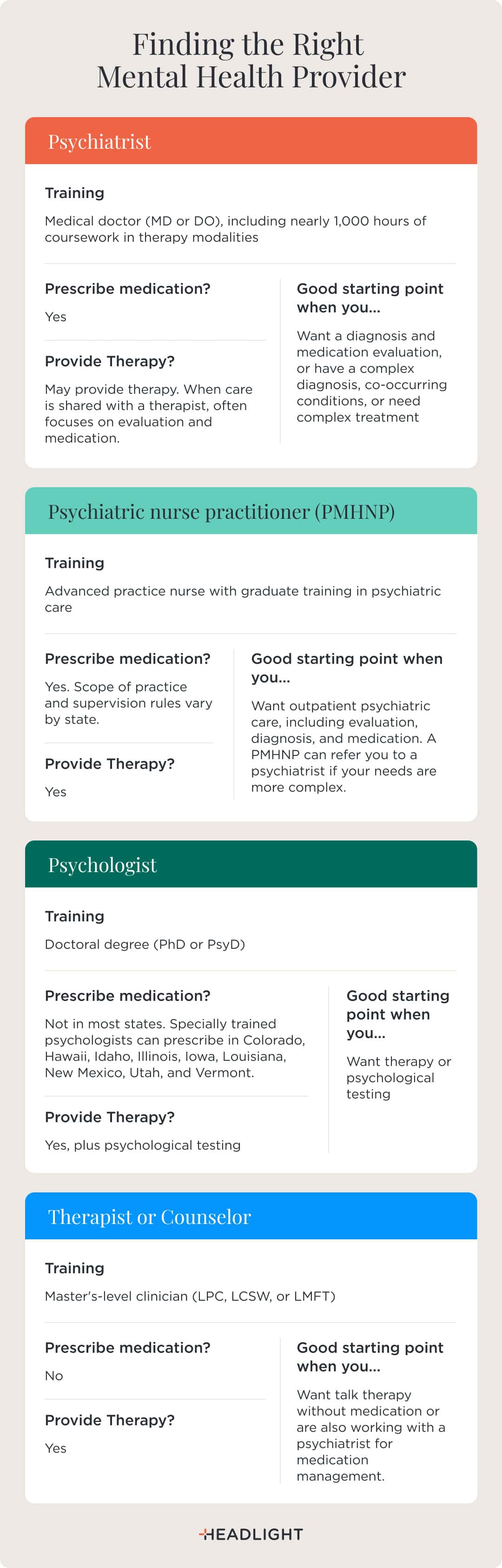
Therapists or counselors are master’s-level clinicians who provide talk therapy and do not prescribe. They hold credentials such as LPC, LCSW, or LMFT. For a comparison of mental health professionals like psychiatrists vs. therapists, see the table “What’s the difference between psychiatrists, psychiatric nurse practitioners, psychologists, and therapists?” and refer to Headlight’s article on determining if therapy or psychiatry is right for you.
Some people choose to see both a therapist and a psychiatrist, although Dr. Pabbati says it’s not required. “All psychiatrists also complete nearly 1,000 hours of coursework in a variety of therapy modalities as well, and integrate them into their daily practice,” he says.
Do psychiatrists do therapy?
Psychiatrists are trained in psychotherapy. In fact, Dr. Pabbati says they receive over 200 hours of classroom and supervised psychotherapy training, though requirements vary by state.. “Good psychiatric care integrates psychotherapy within the evaluation and management of psychiatric illness,” he says. However, some psychiatrists focus on evaluation and medication and rely on therapists to provide weekly talk therapy.
“In some practices, such as mine, a psychiatrist provides both medication management and psychotherapy. In others, the psychiatrist collaborates with a psychologist, therapist, or counselor to coordinate treatment,” Dr. Patel says. “Much of it also depends on the practice model.”
Because psychiatrists’ time is limited and costly, shared care is common and often covered well by insurance. When a patient consents, psychiatrists and therapists can share information about treatment goals and give each other updates.When you’re booking a psychiatrist, ask them if they offer therapy sessions, medication-focused visits, or both.
| Psychiatrist | Psychiatric nurse practitioner (PMHNP) | Psychologist | Therapist or counselor | |
| Training | Medical doctor (MD or DO), including nearly 1,000 hours of coursework in therapy modalities | Advanced practice nurse with graduate training in psychiatric care | Doctoral degree (PhD or PsyD) | Master’s-level clinician (LPC, LCSW, or LMFT) |
| Prescribe medication? | Yes | Yes. Scope of practice and supervision rules vary by state. | Not in most states. Specially trained psychologists can prescribe in Colorado, Hawaii, Idaho, Illinois, Iowa, Louisiana, New Mexico, Utah, and Vermont. | No |
| Provide therapy? | May provide therapy. When care is shared with a therapist, often focuses on evaluation and medication. | Yes | Yes, plus psychological testing | Yes, talk therapy |
| Good starting point when you… | Want a diagnosis and medication evaluation, or have a complex diagnosis, co-occurring conditions, or need complex treatment | Want outpatient psychiatric care, including evaluation, diagnosis, and medication. A PMHNP can refer you to a psychiatrist if your needs are more complex. | Want therapy or psychological testing | Want talk therapy without medication or are also working with a psychiatrist for medication management. |
What conditions do psychiatrists treat?
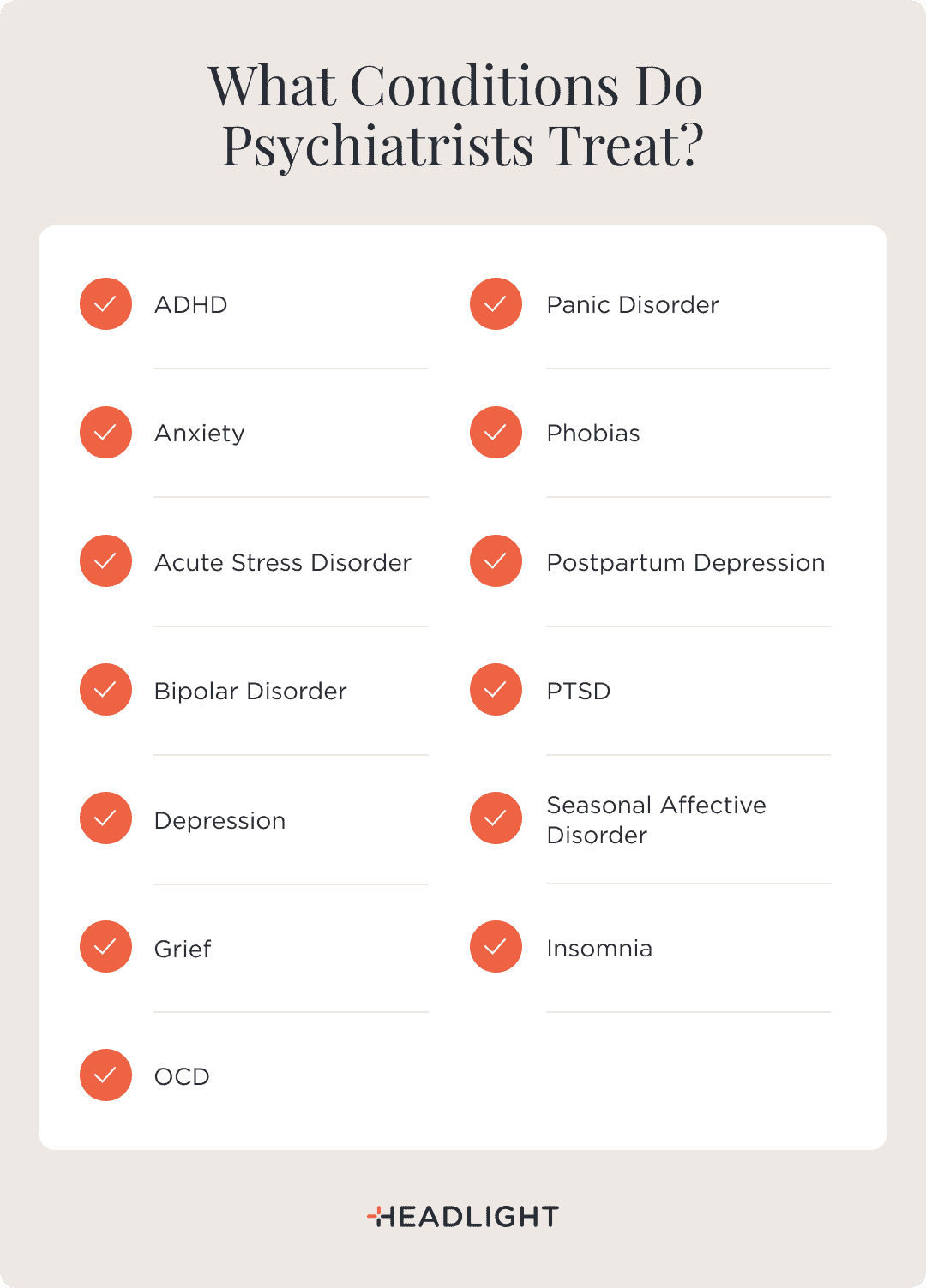
Psychiatrists treat a range of conditions including:
- ADHD
- Anxiety
- Acute Stress Disorder
- Bipolar Disorder
- Depression
- Grief
- OCD
- Panic Disorder
- Phobias
- Postpartum Depression
- PTSD
- Seasonal Affective Disorder
- Insomnia
All psychiatrists are trained and licensed to treat all kinds of mental illness. Many psychiatrists also pursue additional training to specialize for a specific population (such as children and adolescents or elderly patients) or a specific condition (like schizophrenia, eating disorders, or substance use disorders).
“A diagnosis is not necessary to see a psychiatrist. Sometimes the psychiatrist can help you make the diagnosis, though it could take more than one visit,” Dr. Pabbati says.
To determine a diagnosis, psychiatrists use the Diagnostic and Statistical Manual of Mental Disorders (DSM-5-TR) criteria and may use screening questionnaires along with gathering information.
How psychiatrists treat mental health conditions
An evaluation and diagnosis are the foundation of every treatment plan. Psychiatrists choose, prescribe, and adjust medications such as antidepressants, anti-anxiety medications, ADHD medications, and mood stabilizers. They also monitor for side effects.
They coordinate care with primary care doctors and specialists to check for medical causes of symptoms. When treatment includes therapy, psychiatrists will either provide the therapy or give a referral to a therapist or psychologist. When a psychiatrist recommends treatment for symptoms that have not improved, interventional psychiatry may be an option.
The decision to prescribe medications is a collaborative one. “Psychiatrists will weigh the risks, benefits, and alternatives to all medications, and explore their relative value with each patient,” Dr. Pabbati says. “At the end of the day, both the psychiatrist and the patient have to agree on the treatment course and how best to proceed.”
When should you see a psychiatrist?
If you’re wondering when to see a psychiatrist, it may be time when symptoms like low mood, constant worry, or panic attacks last more than two weeks and affect work, relationships, sleep, or daily life. Other signs include experiencing big mood changes, racing thoughts, changes in sleep and appetite, trouble focusing, or loss of interest in things you typically enjoy.
Other reasons include:
- You are receiving therapy, but your symptoms are still disruptive.
- A therapist or primary care doctor has suggested you get a psychiatric evaluation.
- You’re taking psychiatric medication prescribed by a primary care doctor that is not working well or is causing side effects.
If you are having thoughts of suicide or self-harm, call or text 988 to reach the Suicide & Crisis Lifeline or go to the nearest emergency room immediately. Scheduling a psychiatrist appointment is not the right first step in a crisis.
If you’re unsure whether your symptoms require help from a psychiatrist, Dr. Patel says that an evaluation is an opportunity to understand what you are experiencing, explore possible contributing factors, and discuss treatment options. “It does not automatically mean you will receive a psychiatric diagnosis or need medication,” she says. “Sometimes reassurance, education, practical strategies, or recommendations for therapy are appropriate. Other times, an evaluation identifies a condition that would benefit from treatment.”
What happens at your first psychiatrist appointment?
Your first psychiatric evaluation often runs 60 to 90 minutes with follow-ups taking less time, Dr. Pabbati says. At the first visit, the psychiatrist will ask about any current symptoms, how long they have lasted, past mental health care, medical history and current medications, family history, substance use, sleep, and safety.
You will leave the session with a working diagnosis or a plan to clarify one, treatment options to discuss, and next steps. Because you are part of the treatment decisions, it’s ok to ask questions, voice concerns about medication, or ask for time to think.
“Many patients are surprised that psychiatrists are licensed physicians with full medical training. Others are surprised that we are fully trained therapists as well, and are able to provide and integrate those things into daily treatment for our patients,” Dr. Pabbati says.
How to prepare and what to ask
For the first visit, bring a list of current medications and supplements, past diagnoses or treatments, insurance card, and notes on the symptoms you experience and when they began.
Don’t be afraid to ask questions like:
- What do you think is going on?
- What are my treatment options?
- How will we know it is working?
- How often will we meet?
There are no silly questions, and it’s ok to ask a psychiatrist anything. Being honest about any substance use, medication side effects you may be experiencing, and whether you’ve recently stopped a medication helps the psychiatrist help you. You can ask the psychiatrist to explain confidentiality, its limits, and how your information is handled. Confidentiality is a fundamental part of the psychiatric treatment relationship. “Patients should feel that they can speak honestly about their thoughts, emotions, relationships, substance use, and other sensitive experiences without fearing that their information will routinely be shared with others,” Dr. Patel says.
In general, information shared during treatment is protected by privacy laws and professional ethical obligations. However, there are exceptions. “Depending on the circumstances and applicable law, disclosure may be permitted or required when there is a serious safety concern, suspected abuse or neglect of a child or vulnerable adult, a valid court order, or another legally recognized exception,” Dr. Patel says. The goal is to protect patient privacy while fulfilling ethical and legal responsibilities to promote safety, she adds.
How often will you see a psychiatrist?
Early in treatment, follow-ups are often every few weeks while a plan is adjusted, then spaced out to every one to three months. If therapy is part of your plan with a psychiatrist, sessions tend to happen on a weekly basis or a few times per week.
Follow-up visits are usually shorter than the first evaluation and focus on how you’re feeling, functioning, and tolerating treatment. Some people see a psychiatrist for a short period to get a diagnosis and plan; others stay in long-term care for management of conditions like bipolar disorder or schizophrenia.
How to find a psychiatrist (and whether you need a referral)
Many insurance plans do not require a referral, but some HMO plans do. Check your plan by searching the provider directory or call the number on your insurance card. You can ask your primary care doctor for a referral, or Headlight can match you with a mental health clinician.
Psychiatry visits are typically covered as specialist or behavioral health visits, and what you pay depends on how your insurance plan covers therapy. Medicare covers the total amount for annual depression screenings. Psychiatrist visits are covered under Medicare Part B. After you meet the annual Part B deductible ($283 in 2026), you typically pay 20% of the Medicare-approved amount for each visit to diagnose or treat a mental health condition.
If you have Medicaid and your income is at or below the poverty line, a psychiatrist appointment or other outpatient visit generally can’t cost you more than $4. While many states don’t require a copay, they can charge more to people with higher incomes, but total out-of-pocket costs can’t exceed 5% of family income.
If you’re paying out of pocket, you can expect to pay more than $150 per behavioral health visit
Virtual visits can work as well as in-person care for many conditions. Because psychiatrists can be booked weeks or months out in some areas, Dr. Pabbati says many practices have psychiatric nurse practitioners who can fulfil appointments sooner.
Seeing a psychiatrist at Headlight
Headlight offers psychiatric care with psychiatrists and psychiatric nurse practitioners in person at Headlight clinics as well as virtually. Headlight matches you with a psychiatric clinician based on your needs, schedule, and insurance. They can pair psychiatry with therapy at Headlight when both would help.
Psychiatry and medication management at Headlight is in-network with most major insurance plans and files claims for clients. Here’s how to check your mental health benefits and get support from Headlight.
If you are having thoughts of suicide or self-harm, call or text 988 to reach the Suicide & Crisis Lifeline or go to the nearest emergency room immediately.
Frequently asked questions (FAQs)
What should I not say to a psychiatrist?
There’s almost nothing that is not appropriate to share with your psychiatrist. What’s most important is being honest with yourself and your psychiatrist about your comfort with them. If it’s not the right fit, then speak up so you can both either work towards better understanding or facilitate a transition of care.
Do I need a referral to see a psychiatrist?
Some psychiatrists only accept referrals, but most are happy to care for any patient in need of psychiatric treatment. Many insurance plans do not require a referral, but some HMO plans do. Check your plan by searching the provider directory or call the number on your insurance card. You can ask your primary care doctor for a referral or Headlight can match you with a clinician.
Can a psychiatrist diagnose ADHD?
Absolutely. ADHD is a diagnosis found within the Diagnostic and Statistical Manual of Mental Disorders (DSM) so any psychiatrist can make the diagnosis.
Deep dive recommendations
· https://www.nimh.nih.gov/health/publications/tips-for-talking-with-your-health-care-provider
· https://www.nimh.nih.gov/health/topics/mental-health-medications